
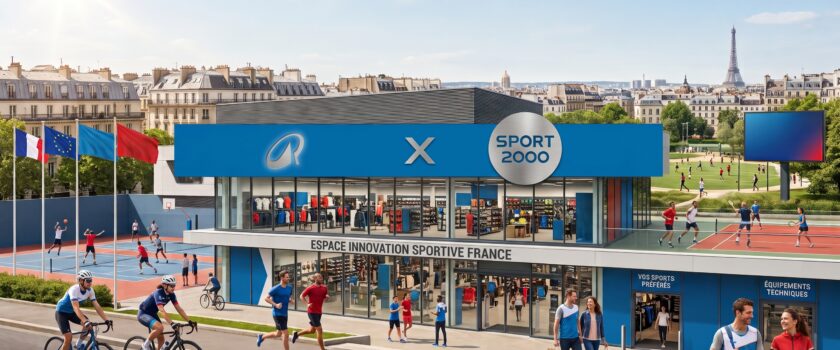
Decathlon × Sport 2000: A New Balance of Power in French Sporting Goods
The French sporting goods market is consolidating again. Three years after Intersport acquired Go Sport, Decathlon has signed a letter of intent to acquire a 50% stake in Sport 2000 France, owned by Céraclès Coopérative. The transaction remains subject to regulatory approval and its financial terms have not been disclosed.
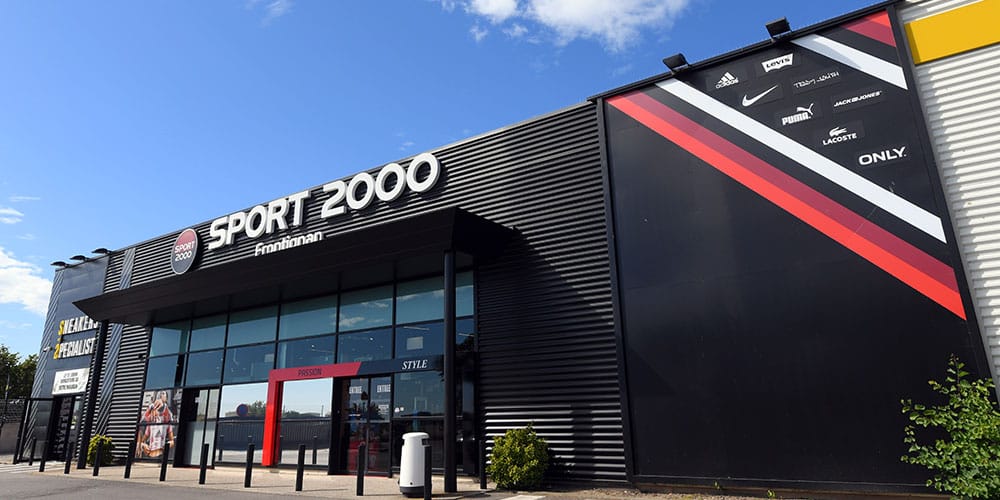
At first sight, the rationale is straightforward. Decathlon operates 325 stores in France, while Céraclès has around 700 locations across its different networks, including some 400 Sport 2000 stores as well as Mondovélo, Espace Montagne, S2 Sneakers Specialist and WAS We Are Select. The two footprints are also highly complementary, particularly in mountain regions where Sport 2000 has developed a presence that Decathlon has never matched.
Yet the significance of the transaction goes beyond store numbers. It comes at a time when French sporting goods retail is increasingly concentrated around a small number of powerful buying organisations. It could also give Decathlon a new distribution channel for its own brands, bringing products historically sold through its vertically integrated model into independently operated, multi-brand stores.
For brands, retailers and the people working between the two, the transaction could therefore contribute to a broader shift in the balance of power across the French sporting goods industry.
A French market increasingly concentrated around two giants
The proposed investment comes three years after another major consolidation move in French sporting goods retail. In 2023, Intersport acquired 68 Go Sport stores, considerably strengthening a network that was already Decathlon’s largest domestic competitor.
The French Competition Authority’s analysis of that transaction provides a useful indication of just how concentrated the market had already become. Using its “by banner” approach, the authority estimated that Decathlon alone accounted for more than 50% to 60% of the relevant national physical sporting goods retail market. The Intersport and Go Sport stores included in the same analysis represented approximately 30% to 40%.
Those figures need to be interpreted within the specific market definition used by the authority rather than as market shares for the entire French sports industry. Nevertheless, they illustrate the scale of the two ecosystems that now dominate much of French sporting goods distribution.
The implications for suppliers are significant. Brands negotiating with Decathlon or Intersport are dealing with organisations controlling hundreds of stores, considerable volumes of consumer data and an increasingly important share of their physical access to French consumers. Greater concentration can translate into greater influence over purchasing conditions, margins, promotional calendars, assortment decisions, shelf space and marketing contributions.
This dynamic is made more complex by the development of retailers’ own brands. Global sports companies such as Nike, Adidas, Salomon, Puma, Asics, New Balance and On increasingly face retail partners that are simultaneously among their largest customers and competitors for the same consumer spending.
For independent brands with fewer alternative distribution channels, the evolution could prove even more consequential.
Decathlon has the financial firepower to keep expanding
Few companies in the European sporting goods industry can match Decathlon’s financial capacity. In 2025, the French group generated €20.7 billion in Gross Merchandise Volume and €16.8 billion in net sales. EBITDA increased 21% to €1.8 billion, while net income rose 16% to €910 million.
The group now operates 1,902 stores across 82 countries and regions and sold 1.23 billion products in 2025. This scale, combined with close to €2 billion in annual EBITDA, gives Decathlon considerable capacity to invest in stores, technology, services and partnerships while continuing to develop its core business.
The Sport 2000 transaction should be viewed in that context. Decathlon is not simply defending its position in France. It has the financial resources to expand the ecosystem surrounding its brand and to address categories, services and territories where its historical retail model has been less effective.
Céraclès offers precisely that kind of opportunity.
The map explains the strategic rationale
The geographic complementarity between the two networks is particularly striking. Decathlon has built much of its French footprint around large stores serving major urban and peri-urban catchment areas. Sport 2000 reaches much deeper into secondary cities and mountain regions through a network of independently operated stores.
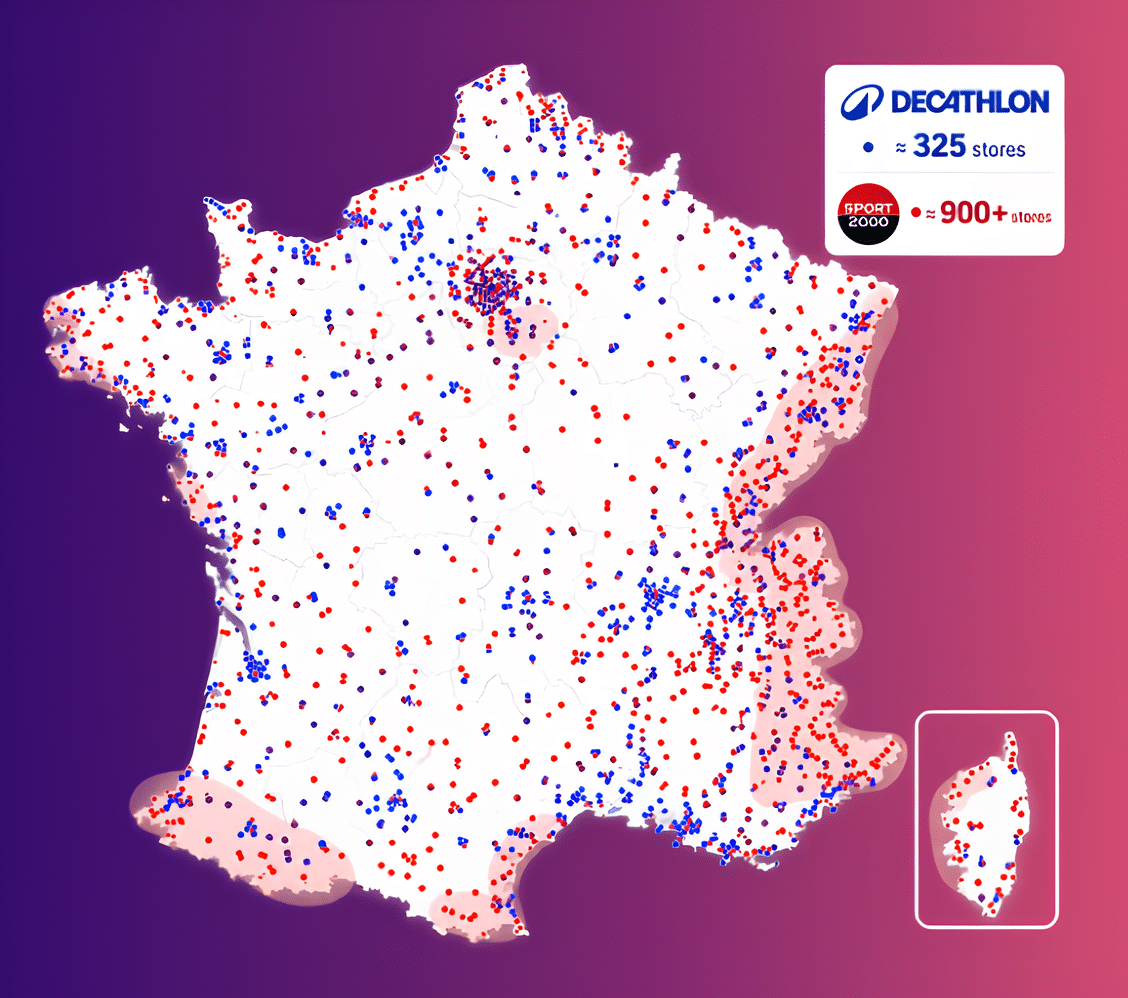
The contrast is particularly clear in outdoor. Mountain sports, including hiking and winter sports, already account for around 25% of Decathlon’s French business. Yet the retailer operates only five stores in mountain locations, compared with 190 for Sport 2000.
For Kenza Ligué, Head of Outdoor at BOOST, the HR consulting firm specialising in the sports industry and owner of Sportyjob, the map of the two networks reflects a broader industry trend. “What is particularly interesting is where Sport 2000 brings additional coverage. We are seeing sustained momentum around outdoor brands and categories, and many of these territories, especially mountain regions and secondary cities close to outdoor destinations, are becoming increasingly strategic markets. For Decathlon, strengthening its presence there is not only about adding stores. It means getting closer to consumers in categories that are likely to remain important growth drivers for the industry.”
The transaction gives Decathlon access to a physical network that would be difficult and time consuming to replicate organically. Building a comparable presence across French mountain destinations would require substantial real estate development and local knowledge. Sport 2000 already benefits from entrepreneurs embedded in those communities and established positions in winter sports and ski rental. Céraclès also brings specialist networks such as Mondovélo in cycling, giving the partnership relevance beyond the core Sport 2000 banner.
This distinction matters because Decathlon is not acquiring hundreds of stores that will simply be converted into Decathlon locations. Sport 2000 stores will remain independently operated. Decathlon is investing in the organisation and ecosystem behind the network, creating opportunities that extend beyond geographic expansion.
Decathlon could take its brands beyond its own stores
For decades, one of Decathlon’s defining competitive advantages has been vertical integration. The group designs products, manages production and sourcing, distributes them through its logistics infrastructure and sells them predominantly through its own physical and digital channels. Decathlon itself continues to describe the combination of design, production and distribution as a key competitive advantage.
The company has also spent recent years simplifying and strengthening its brand architecture. Its transformation has put the Decathlon name back at the centre of the portfolio while concentrating investment behind specialist brands including Quechua, Rockrider, Kiprun, Van Rysel and Simond.
The Sport 2000 partnership could now introduce a significant new dimension to that strategy. According to the companies, the agreement would allow Decathlon products to become available through the Sport 2000 network, while individual store owners would retain independence over their operations.
For Decathlon, this creates an opportunity to learn how its brands perform in a genuine multi-brand environment. Kiprun could find itself competing for the same assortment space as established running specialists. Quechua or Simond products could sit alongside global outdoor brands, while Van Rysel could potentially reach cycling consumers outside Decathlon’s own retail network.
It would be premature to describe this as a wholesale transformation. Decathlon’s integrated direct distribution model remains fundamental to its economics and positioning. But Sport 2000 could provide the group with a significant testing ground for a more open distribution strategy, and potentially for capabilities that Decathlon has historically had less reason to develop.
For established sports brands, the development will be closely watched. One of their most important retail partners could progressively become a more visible competitor within multi-brand distribution itself.
Independent retailers face pressure, but specialisation still matters
The consolidation of purchasing power also raises questions for sporting goods retailers operating outside the largest networks. Scale provides obvious advantages in purchasing conditions, payment terms, product allocations, marketing support, logistics and technology. As buying organisations grow larger, competing as a standalone generalist retailer becomes increasingly difficult.
That does not necessarily mean that every independent retailer is threatened to the same degree. Specialisation remains a powerful differentiator in categories where technical expertise, community and service matter. Running, cycling, outdoor and skiing have all produced retailers capable of building strong positions without matching the purchasing scale of the largest generalists.
Indeed, greater consolidation among mainstream retailers could reinforce the value of genuinely specialist concepts. Large networks need to optimise assortments and operating models across hundreds of locations, while a specialist can build much deeper expertise around a particular sport, consumer or local community.
The greatest pressure may therefore fall on the undifferentiated middle: retailers without the purchasing scale of a major group but also without sufficient expertise, service or community to justify choosing them over a national chain. In an increasingly concentrated market, both scale and specialisation can remain defensible positions. The space between the two is becoming harder to occupy. Our analysis of how the outdoor gear industry hires looks at what this looks like from the specialist side of the market.
What this consolidation means for careers
The consequences of consolidation will also extend to the people sitting between products, brands and distribution. As retailers grow in scale and their business models become more sophisticated, commercial decisions that may once have been relatively operational can have increasingly significant consequences for both retailers and suppliers.
Individual commercial decisions now carry more weight
From a talent perspective, the most important change is the growing weight of individual commercial decisions, according to PE Bétremieux, Co-CEO of BOOST. A Buyer or Category Manager managing several hundred stores can have an enormous impact on both the retailer and its suppliers. On the other side of the table, a Key Account Manager at a brand may increasingly be negotiating with a handful of customers representing a very significant share of the French market. These roles are moving well beyond traditional purchasing or sales skills, combining negotiation, data, finance and category expertise with an increasingly strategic understanding of the business.
Buying, category management and assortment planning gain influence
This should reinforce the importance of experienced profiles in buying, category management, merchandising and assortment planning. The potential introduction of Decathlon products into Sport 2000 stores adds another layer of complexity. Teams will need to determine which products and categories belong in which formats, at what price points and alongside which competing brands. A Sport 2000 store in a ski resort, a Mondovélo cycling specialist and an S2 sneaker store cannot be managed through the same assortment logic.
Key Account Management becomes higher stakes
The evolution is equally important on the supplier side. Managing an account such as Decathlon or Intersport has never been a conventional sales role, but market concentration increases the stakes further. Losing a major product listing, a category position or shelf space with one customer becomes more consequential when that customer represents hundreds of stores. The strongest Key Account Managers will therefore need to combine commercial negotiation with category knowledge, financial understanding, forecasting, data analysis and the ability to coordinate increasingly complex organisations internally.
Wholesale skills could become more relevant inside Decathlon
There is also a less obvious talent implication inside Decathlon itself. The group has built exceptional capabilities in developing products and selling them directly to consumers, but distributing those products successfully through independent multi-brand retailers requires a somewhat different set of skills. Wholesale sales, Key Account Management, trade marketing, partner management, wholesale merchandising and commercial planning could all become more relevant if third-party distribution develops.
Many of those capabilities already exist within the global brands Decathlon competes with. If its distribution model gradually opens, the movement of talent between brands and retailers could therefore become as interesting as the movement of products between their shelves.
A new balance of power
The proposed transaction remains subject to regulatory approval and many questions about the practical implementation of the partnership are still unanswered. What it already illustrates, however, is the speed at which the structure of French sporting goods retail is evolving.
Decathlon enters these discussions from a position of exceptional strength, with €16.8 billion in annual sales and €1.8 billion in EBITDA. Sport 2000 brings a complementary network of independent entrepreneurs and access to territories, particularly in mountain regions, where Decathlon has comparatively little physical presence. Together, the two organisations could also create a new route to market for Decathlon’s brands.
For suppliers, meanwhile, the broader consolidation of French retail means dealing with fewer organisations controlling greater volumes, more stores and more consumer access. The balance between retailers and brands will not change overnight, but the direction of travel is difficult to ignore.
The consequences will ultimately be visible not only in market shares and store maps, but also in the roles connecting the industry. As purchasing organisations become more powerful, Buyers and Category Managers gain influence. As assortments become more complex, Merchandising and Planning become more strategic. And as brands depend on a smaller number of increasingly powerful customers, Key Account Management becomes a more demanding and consequential responsibility.
For an industry historically shaped by the strength of its brands, the Decathlon × Sport 2000 transaction is another indication that an increasing share of power may now sit with the organisations, and the people, deciding which products ultimately make it onto the shelves. Curious which roles are moving fastest across the wider industry? Read our take on the European sports talent market, or browse the latest sports business jobs in Europe directly on the SPORTYJOB platform.
Share
Facebook
X
LinkedIn
Telegram
Tumblr
Whatsapp
VK
Bluesky
Threads
Mail