
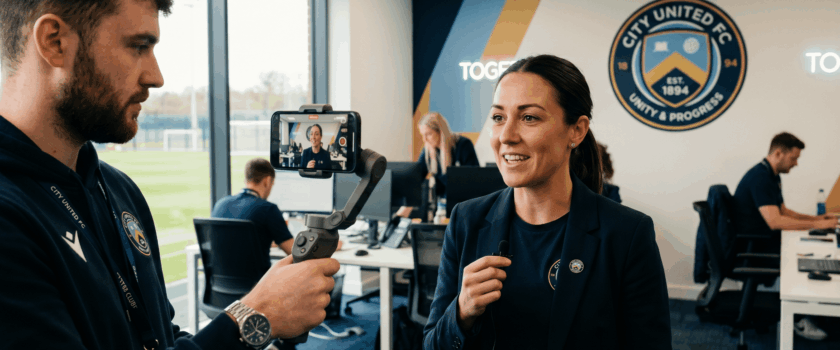
How to promote your employer brand in the sports sector: channels, formats and best practices
In the sports industry, talent doesn’t just respond to job offers. It responds to brands that feel alive, credible, and connected to the culture of sport. That’s why employer brand promotion in the sports sector has become one of the most strategic levers for clubs, federations, agencies, equipment manufacturers and sports tech companies competing for a relatively small, highly passionate talent pool.
The challenge is that most sports organisations still treat employer branding as a side project. They post a few photos from team-building events on LinkedIn, write a generic “join us” page, and hope candidates apply. In a sector where applicants often have a dozen options and strong personal preferences, that’s not enough.
This guide walks through the channels that actually move the needle, the content formats that resonate with sports talent, and the editorial habits adopted by sports brands with strong employer visibility.
The best channels to promote your employer brand as a sports company
Sports employer branding channels fall into three broad categories: owned, earned, and specialised. Each plays a different role, and the strongest employer brands in sport orchestrate all three.
LinkedIn remains the backbone. For the sports industry, LinkedIn is where decision-makers, mid-level professionals, and ambitious students gather. A sports company posting consistently on LinkedIn (employee stories, behind-the-scenes content, leadership perspectives) builds long-term recall with candidates who may not be looking today but will be in six months. The platform also rewards authenticity over polish, which suits sports culture well.
Instagram and TikTok matter more than HR teams admit. Younger candidates (especially those targeting roles in marketing, content, athlete services, or retail) live on these platforms. They consume employer signals through reels, behind-the-scenes content, and event coverage long before they ever read a job description. A federation or brand that ignores them is invisible to a meaningful slice of the talent pool.
Specialised sports job platforms. General job boards bury sports roles under thousands of unrelated listings. Specialised platforms like SPORTYJOB concentrate sports-passionate candidates in one place, which means an employer presence there reaches an audience that already wants to work in sport. The signal-to-noise ratio is unmatched.
Industry events and conferences. SPORTEL Monaco, Sport Business Summit, ISPO, and dozens of regional gatherings still drive a large share of senior recruitment in sport. Speaking slots, panels, and visible sponsorships count as employer branding even when no one calls them that.
Your own careers page and blog. Often neglected, often underwhelming. A careers section that explains who you are, why people stay, and what daily life actually looks like is the single most controllable employer brand asset you have.
Content formats that work for sports employer branding
Channels are only as good as what you put on them. Employer brand content for sport tends to fall flat when it copies generic corporate playbooks. The formats that work share a common thread: they show real people doing real things in environments candidates can imagine themselves in.
Employee stories and “day in the life” content. A short video or written profile of a sports product manager, a club’s social media editor, or a federation’s events coordinator outperforms almost any other format. Candidates want to see what the job actually involves, not what the marketing team wishes it involved.
Founder and leadership voice. In smaller sports brands and agencies, the founder’s personal LinkedIn often carries more employer branding weight than the company page. Leaders who post regularly about hiring, decisions, mistakes, and culture create a magnetic effect for like-minded talent.
Behind-the-scenes coverage of events and matchdays. Sports companies have something most industries lack: visually compelling moments built into the working week. Filming the operations team setting up a stadium, the digital team running a livestream, or the merchandising team preparing a launch translates effortlessly into employer brand material.
Recruitment campaigns with editorial substance. Instead of “we’re hiring”, publish a piece that explains why the role exists, what the team is trying to build, and what the next two years will look like. This positions the company as serious and self-aware. SPORTYJOB’s INSIDERS series, which profiles sports industry leaders, is one example of this format applied at platform level.
Salary transparency and career progression content. Sports talent is often suspicious of pay in the sector (sometimes rightly so). Publishing salary ranges, internal promotion stories, and career path examples builds trust faster than almost any other format.
Short-form video. Reels and TikToks built around a specific employee, a specific moment, or a specific question (“what’s the hardest part of working at a sports federation?”) consistently outperform polished corporate videos.
Best practices from sports brands with strong employer visibility
Looking across federations, clubs, agencies, and sports tech companies that consistently attract strong applications, a few patterns emerge.
They post weekly, not quarterly. LinkedIn employer brand visibility in sport is a function of frequency. Brands posting two to three times a week stay top-of-mind. Brands posting once a month vanish from candidates’ feeds and from recruiters’ shortlists.
They let employees speak. The best sports employer brands push their content through individual employee profiles, not just the corporate channel. A community manager talking about her job from her own account reaches and converts better than the same words on the brand page.
They invest in long-form, not just snippets. Articles, podcasts, and interviews give candidates the depth they need to make a decision. Sports company recruitment marketing that relies only on short posts forces candidates to fill in the gaps themselves, and they often fill them with doubt.
They tie employer branding to the product and the audience. A football club whose employer brand sounds like a generic SaaS company breaks the magic. The most effective sports brands write about their teams, their fans, their season, and their projects in a way that makes the work feel inseparable from the sport itself.
They measure, even imperfectly. Tracking applications by source, candidate quality by channel, and time-to-fill by role tells you which employer branding investments are actually working. In sport, where budgets are tight and HR teams are small, this discipline separates serious operators from companies still doing employer branding by intuition.
They use specialised media. Featuring on a sports-specific platform like SPORTYJOB does double duty: it reaches the right audience and signals that the company belongs to the sports industry community, not just to a generic talent market.
Building visibility that lasts
Employer brand promotion in the sports sector isn’t a campaign. It’s a long-term editorial commitment. The companies winning the talent war in sport today are the ones that decided, two or three years ago, to publish consistently, give their people a voice, and partner with the channels and platforms where sports professionals actually spend their time.
The good news: the sports industry is small enough that consistent visibility compounds quickly. Twelve months of disciplined employer branding can move a company from invisible to top-of-mind for the candidates that matter most.
Want to put your employer brand in front of Europe’s largest community of sports professionals? Discover how SPORTYJOB helps sports companies build visibility, attract qualified candidates, and tell their story to the right audience.
Share
Facebook
X
LinkedIn
Telegram
Tumblr
Whatsapp
VK
Bluesky
Threads
Mail