
How the outdoor gear industry hires: what Salomon, Arc’teryx and Mammut look for
Outdoor gear industry jobs attract a specific kind of candidate: someone who doesn’t separate their professional ambitions from their relationship with the mountains, the trails, or the water. The sector knows this, and the brands that have built the most distinctive cultures, Salomon, Arc’teryx, and Mammut among them, have developed hiring approaches that go well beyond the standard recruitment process.
But passion alone won’t get you hired. These companies receive thousands of applications for a limited number of roles. Understanding what they actually look for, in profiles, in values, and in how candidates present themselves, is the real competitive advantage for anyone serious about breaking into this industry.
This article draws on what is publicly known and widely observed about how leading outdoor brands approach talent acquisition, and what that means practically for your job search.
The profiles outdoor gear brands recruit most
Outdoor brands are no longer just product companies. They operate complex global supply chains, run sophisticated digital marketing and e-commerce operations, manage athlete partnerships and event programmes, and increasingly invest in sustainability and materials innovation. The range of profiles they recruit reflects that complexity.
Product and design
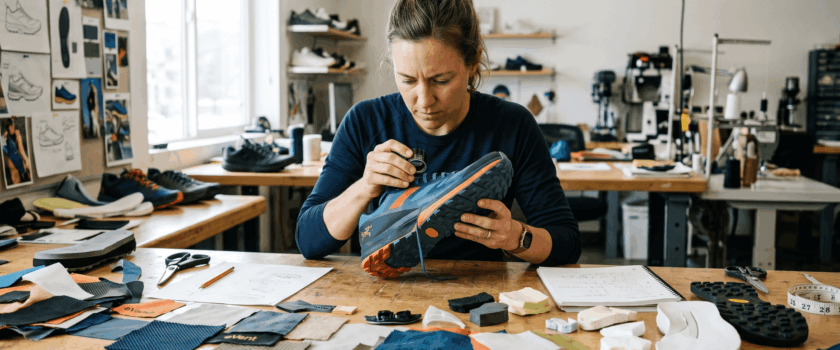
This remains the core of what outdoor gear companies do, and it’s where hiring standards are highest. Product managers, industrial designers, apparel developers, and footwear engineers are in constant demand at brands like Salomon and Arc’teryx. The technical bar is genuine: candidates are expected to understand materials, manufacturing constraints, performance testing, and the end-user experience in demanding environments.
What separates strong candidates in this category is not just technical knowledge but firsthand product experience. Someone who has tested gear in real alpine or trail conditions brings a perspective that cannot be taught in a classroom. Arc’teryx in particular is known for its emphasis on product authenticity: the people making decisions about gear are expected to use it seriously.
Digital, e-commerce and marketing
The commercial side of outdoor brands has expanded significantly over the past decade. Performance marketing, CRM, content strategy, ambassador and influencer management, and direct-to-consumer e-commerce have become large functional areas with significant headcount. Salomon’s digital team, based across Annecy and other European hubs, is a substantial operation by any measure.
These roles attract candidates from outside the outdoor industry, and the brands are generally open to that. A strong e-commerce manager from a fashion or consumer electronics background can transition successfully if they bring demonstrable results and a credible connection to the outdoor world.
Sustainability, materials and supply chain
This is the fastest-growing hiring area across the sector. Brands are under significant pressure, from consumers, regulators, and their own values commitments, to demonstrate progress on environmental impact. Mammut, Arc’teryx, and Salomon have all invested in sustainability roles at both strategic and operational levels: sustainability directors, circular economy specialists, responsible sourcing managers, and materials innovation leads.
Candidates in this space tend to come from textile engineering, environmental science, supply chain management, or policy backgrounds. The outdoor sector is increasingly competitive against luxury and fashion brands for this talent.
Retail, wholesale and sales
Outdoor brands rely on a combination of their own retail operations and a wholesale network of specialist retailers. Regional sales managers, key account managers, retail operations leads, and visual merchandising specialists are perennial hiring needs. These roles require both commercial acumen and deep product knowledge: you are selling technical gear to buyers who know their sector well.
What Salomon, Arc’teryx and Mammut value beyond the CV
Hiring managers at leading outdoor brands consistently describe a set of qualities that separate candidates who succeed from those who don’t, and most of them are not directly visible on a CV.
Genuine outdoor practice
This is the most consistent theme across all three brands. It is not enough to say you like the outdoors. Hiring managers at Salomon, Arc’teryx, and Mammut are looking for candidates who have a real, ongoing relationship with outdoor sport: trail running, ski mountaineering, climbing, hiking, kayaking, or any discipline that puts them in meaningful contact with the products and environments the brand serves.
This doesn’t mean you need a competition record or an expedition history. It means your outdoor practice is genuine, current, and informing how you think about your work. In interviews, candidates who can speak specifically about how they use products, what they value in gear, and what they’ve noticed in the field carry significantly more weight than those who describe their outdoor interests in vague or aspirational terms.
For Salomon jobs in particular, trail running and mountain sports credibility is deeply embedded in the brand culture. The Annecy headquarters is surrounded by mountains, and the employee community reflects that. Arriving for an interview without a genuine trail running or mountain background will be noticed.
Values alignment with sustainability and responsibility
Arc’teryx careers content and employer brand material consistently foreground the company’s commitment to environmental responsibility, product longevity, and a repair-over-replace philosophy. This is not just marketing. It’s a live operational commitment that shapes how decisions are made internally.
Candidates who have thought seriously about sustainability, who can speak to their own practices and beliefs around consumption and environmental impact, and who can connect those values to how they want to work, will resonate more strongly with Arc’teryx hiring teams than those who treat sustainability as a box to check.
Mammut recruitment similarly reflects the brand’s Swiss heritage and its long-standing connection to alpine safety and environmental stewardship. Candidates who understand the mountain environment as a place of responsibility, not just recreation, align naturally with how Mammut thinks about its mission.
Cross-functional curiosity
Outdoor brands, even at significant scale, operate in ways that require employees to think across functional boundaries. A product manager needs to understand marketing constraints. A sustainability manager needs to understand sourcing and cost implications. A digital marketer needs to understand the retail channel dynamics.
Hiring managers describe this as “T-shaped” thinking: depth in one area, genuine curiosity and literacy across others. Candidates who have worked in cross-functional project environments, or who can demonstrate that they engage with parts of the business beyond their own job description, stand out consistently.
Directness and low ego
The culture at most outdoor brands is informal by corporate standards. There is generally a flat-ish hierarchy, an expectation that people speak directly, and a low tolerance for politics or self-promotion that isn’t backed by substance. This applies even at senior levels.
In practice, this means that how you conduct yourself in the hiring process matters as much as what you say. Being direct about what you know and don’t know, asking genuine questions, and engaging with the role and the business rather than performing for the interviewer, tends to land better than a highly polished presentation that feels rehearsed.
How to break into the outdoor gear industry: tips from insiders
The outdoor industry is not an easy sector to enter from the outside, but it is more accessible than many candidates assume, if they approach it correctly.
Lead with your outdoor identity, not just your professional credentials
The cover letter or introductory message that lands at an outdoor brand is almost never the one that leads with a list of professional accomplishments. It’s the one that establishes, briefly and specifically, who the candidate is as an outdoor person, and then connects that identity to the professional value they bring.
This doesn’t need to be long. Two sentences about your outdoor practice that are concrete and genuine will do more work than a paragraph of corporate language.
Target specialist platforms and industry networks
General job boards will surface some outdoor gear industry jobs, but the best roles are often posted first on specialist platforms, shared within industry networks, or filled through referrals. Attending trade events like ISPO in Munich or Outdoor Retailer, following brand hiring teams on LinkedIn, and building genuine relationships within the outdoor professional community are all part of a serious job search in this sector.
SPORTYJOB’s coverage of outdoor and sports brands across Europe gives candidates access to roles at companies like Salomon, Mammut, and others in the ecosystem, often before they reach wider distribution.
Be specific about which brand and why
Outdoor brands, Arc’teryx careers teams especially, are attentive to whether a candidate is applying broadly across the sector or has a genuine affinity with the specific brand. The brands are different from each other in important ways: Salomon’s culture is performance-sport-driven and fast-moving; Arc’teryx is design and craft-obsessed with a strong sustainability ethos; Mammut carries a deep alpine heritage and a Swiss-inflected precision.
Knowing the difference, and being able to articulate why one brand resonates more than another, is the kind of specificity that signals genuine engagement rather than a mass application.
Don’t wait for the perfect role
Many people who successfully break into the outdoor industry started in roles that weren’t their ideal entry point: a retail position, a logistics coordinator role, a junior marketing assistant. From inside the brand, opportunities to move into more senior or more specialized roles become visible, and internal mobility is common at most outdoor companies.
If you’re early in your career or making a transition from another sector, a lower-profile entry role at the right brand can be a better strategic move than waiting for the perfect title at a company you don’t know.
Your next step in the outdoor industry
The outdoor gear sector rewards people who combine professional rigour with genuine outdoor identity. Salomon, Arc’teryx, and Mammut are not looking for candidates who happen to own a fleece. They’re looking for people for whom outdoor sport is a real part of how they live, and who bring that perspective into how they work.
If that describes you, the sector is more accessible than it looks from the outside. The hiring process is human, the cultures are genuine, and the roles span a far wider range of functions than most candidates realise.
Browse open roles at Salomon, Arc’teryx, Mammut, and other leading outdoor brands on SPORTYJOB. Take the next step in your outdoor industry career and find a role that fits both your skills and your sport.
Share
Facebook
X
LinkedIn
Telegram
Tumblr
Whatsapp
VK
Bluesky
Threads
Mail