
On × Kylian Mbappé: how sports brands buy their way into new categories
By PE Bétremieux (Co-CEO, BOOST)
Kylian Mbappé leaving Nike after 20 years was always going to make headlines. But the most interesting part of the deal may not be the athlete changing brands. It is what On is trying to build around him.
The Swiss company is entering football for the first time, with its first football boots expected in 2027. Mbappé will not simply appear in campaigns. He is expected to work directly with On’s product teams, while Thierry Henry has been appointed Director of Football after working behind the scenes on the project since late 2025. Swiss international and FC Barcelona player Sydney Schertenleib is also involved in product development and testing.
There is another important detail. Mbappé’s agreement reportedly includes both cash and equity, although the financial terms and size of his stake have not been disclosed.
Put together, these elements suggest something much more ambitious than an endorsement deal. On is using one of football’s most recognisable athletes to accelerate its entry into the world’s biggest sport, while simultaneously building the products, expertise and organisation required to compete there.
And it is not the first time the company has used this playbook.
The Federer playbook, applied to football
When Roger Federer joined On in 2019, the relationship was deliberately presented as something different from a traditional sponsorship. Federer became a co entrepreneur in the company and worked with its teams on product development, marketing and the expansion of the brand into tennis.
At the time, On was still overwhelmingly associated with running. Federer gave the Swiss company something that product development alone could not provide quickly: immediate legitimacy in a sport where it had almost no heritage.
The partnership eventually extended far beyond Federer’s personal footwear. On built a dedicated tennis range, signed professional athletes including Iga Świątek and Ben Shelton, and established a credible presence in a category historically dominated by much larger sportswear companies.
Seven years later, the Mbappé deal follows a strikingly similar logic, only on a much larger sporting stage.
Mbappé arrives not only as an ambassador but as a shareholder and contributor to product development. On has surrounded him with additional football expertise. Henry’s role covers product, athlete relationships and the broader cultural positioning of On Football, while Schertenleib brings the perspective of a new generation of elite female players. On says its football development process will be athlete led from the outset.
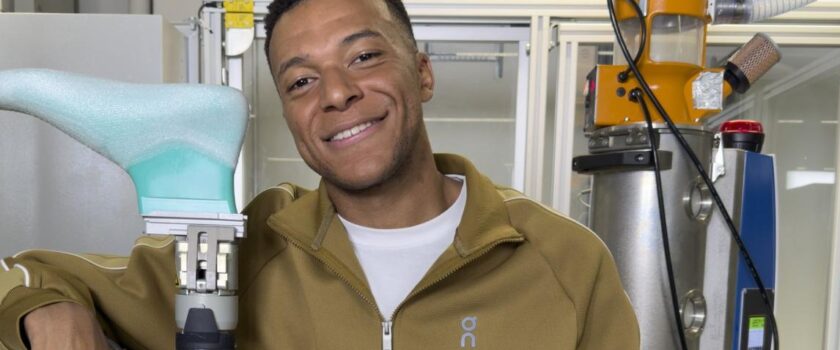
The company is also bringing one of its most distinctive technologies into the category. LightSpray, On’s robotic manufacturing process originally developed for running footwear, is being adapted to the demands of football boots.
The objective is therefore not simply to borrow Mbappé’s audience. It is to use elite athletes as part of the infrastructure required to build an entirely new business.
Product innovation is not enough when entering a new sport
On’s move comes only days after another significant announcement in the sporting goods industry.
On September 11, Salomon announced a five year partnership with IRONMAN. From 2027, the French brand will become an IRONMAN Global Premier Partner across performance footwear, apparel and technical bags. More significantly, it will become Title Partner of the IRONMAN World Championship in Kona through 2031 and will own the naming rights to the running course at IRONMAN owned events included in the partnership.
Salomon and On are very different companies entering very different categories, but the two moves illustrate a similar strategic challenge.
Developing a technically credible product does not automatically make a brand credible within a sporting community.
Salomon has decades of performance heritage, but its strongest historical association remains with mountain sports, skiing and trail running. As the company pushes further into road running and the broader endurance market, IRONMAN gives it immediate access to one of the most established communities and platforms in endurance sport.
On is approaching football from the opposite direction. Instead of acquiring an event platform, it has assembled people who already carry enormous legitimacy within the sport.
For brands entering a new category, these assets can effectively compress time. Building cultural credibility organically may take a decade. A major athlete, event, team or competition can provide immediate relevance while the brand develops the products, distribution and community required to sustain its presence.
That does not guarantee success. Sportswear history contains plenty of examples of expensive endorsements that failed to create durable category positions. But it explains why access to the right sporting assets remains so valuable, particularly when brands move beyond the categories in which consumers already consider them legitimate.
On is becoming something much bigger than a running brand
Football also needs to be understood within the broader transformation of On.
Founded in 2010 around running footwear, the company has already travelled a considerable distance from its original category. Running remains its technical and cultural foundation, but lifestyle products have introduced On to a much broader consumer base, while tennis, outdoor and training have progressively expanded the sporting perimeter of the brand.
The financial trajectory has been equally striking. On passed CHF 3 billion in annual sales for the first time in 2025, up 30% year on year, with adjusted EBITDA reaching CHF 567 million. Wholesale still represented 58.2% of annual sales, but the company has simultaneously accelerated its direct to consumer business and expanded its own retail network.
The product mix is broadening too. Apparel sales increased 68.2% in 2025 and another 46.4% during the first half of 2026. On now explicitly describes its ambition as becoming the world’s most premium global sportswear brand rather than simply a specialist running company.
Football puts that ambition into a different perspective.
Running allowed On to build technological credibility. Lifestyle turned performance shoes into objects consumers could wear every day. Tennis demonstrated that the brand could transfer its identity into another established sport. Football is a much larger test of whether the same model can work in a category where Nike, Adidas and Puma have spent decades building relationships with athletes, clubs, federations and consumers.
The scale of the opportunity is larger, but so are the barriers to entry.
Mbappé is also a sign of how the competitive landscape is changing
For Nike, losing an athlete who had worn the brand since 2006 is significant, although it should not be overstated. The American group retains an enormous football portfolio and long term relationships with some of the sport’s most important teams and federations.
But Mbappé’s departure forms part of a broader shift in the competitive environment. Nike has also lost Lamine Yamal to Adidas, while Puma took over the Premier League match ball contract. At the same time, younger companies such as On have accumulated enough financial resources and brand desirability to compete for assets that would once have seemed difficult to take away from the industry’s largest players.
On enters that competition from a position of growing financial strength. Its sales reached CHF 1.68 billion in the first half of 2026, with constant currency growth of 24%. The company expects full year sales of between CHF 3.47 billion and CHF 3.56 billion and an adjusted EBITDA margin of between 19.5% and 20%.
Those numbers remain far below Nike or Adidas in absolute terms. But they give On increasing freedom to make long term investments in categories where the immediate financial return may not be obvious.
The equity component of the Mbappé agreement is particularly interesting in that context. It aligns the athlete with the longer term value of the company rather than limiting the relationship to an endorsement fee. That echoes the entrepreneurial logic established with Federer, even if the structure and size of the two arrangements are not publicly comparable.
Football may not be the end of the expansion
There is another signal worth watching.
In February 2026, On became the first private partner of Switzerland’s bid to host the 2038 Olympic and Paralympic Winter Games. The company committed to provide 10% of the private deficit guarantee required for the project, positioning itself as one of the bid’s founding corporate supporters.
There is currently no evidence that this means On intends to launch skiing or winter sports product categories, and it would be premature to draw that conclusion. The company already has a connection to winter sport through its relationship with Swiss Ski, but Switzerland 2038 is first and foremost a long term institutional and national partnership.
Still, viewed alongside the expansion into tennis and now football, the commitment is revealing. On increasingly wants to participate in the broader global sports ecosystem rather than occupy a single corner of the footwear market.
The progression is becoming clear. Running established the technology. Lifestyle expanded the audience. Tennis proved that On could enter another sport. Football now tests whether the company can build a major global category from scratch.
The question is no longer whether On can grow beyond running. It is how far the brand ultimately intends to go.
Entering a sport also means building a talent ecosystem
There is one part of category expansion that receives much less attention than athlete deals: people.
Signing Mbappé creates visibility overnight. Building a competitive football business does not.
Football footwear requires specialist product developers, designers, biomechanical expertise and athlete testing. Building the category commercially requires sports marketing, athlete management, merchandising, category management, wholesale sales, Key Account Management and relationships with specialist retailers. If the ambition eventually extends deeper into teams, clubs or federations, another layer of expertise becomes necessary.
The appointment of Thierry Henry as Director of Football is therefore as interesting organisationally as it is from a marketing perspective. On is importing knowledge of the sport directly into the company while its technical teams develop the product.
That process is likely to extend much further than one high profile appointment. Nike, Adidas and Puma have spent decades building organisations around football. For a challenger attempting to accelerate its entry, some of the most valuable assets in the market may therefore be the people who already understand how those organisations work.
This is where category expansion can create significant career movement across the sporting goods industry. When a running company enters tennis or football, or when a mountain brand pushes into road running and triathlon, it needs capabilities that often already exist somewhere else. Product developers, Sports Marketing Managers, Category Managers, Key Account Managers and Merchandisers suddenly find that expertise built in one sporting universe can become highly valuable to another.
The competition between sports brands is therefore increasingly also a competition for specialised talent. And for those interested in seeing how that translates into actual hiring, On’s current career opportunities are available on Sportyjob.
The real asset is credibility
The Mbappé announcement has understandably been framed as one of the biggest athlete moves in sportswear. After two decades with Nike, one of football’s most valuable players joining a Swiss challenger is a remarkable story in itself.
But viewed alongside Federer’s role in On’s development, Henry’s appointment, Salomon’s investment in IRONMAN and On’s involvement in Switzerland 2038, a broader pattern emerges.
Entering a new sport requires more than launching a product. Brands need technology, distribution and talent, but they also need permission from consumers to belong there. That permission is difficult to manufacture through advertising alone.
The most powerful sporting assets can help provide it. An athlete can embody a new category. An event can connect a brand with an established community. An industry expert can bring knowledge that would otherwise take years to build internally.
The strongest brands then use that borrowed credibility to build something permanent around it.
That is the real test for On. Mbappé can make millions of football fans look at the brand differently almost overnight. What On builds behind him will determine whether they are still looking in ten years.
Share
Facebook
X
LinkedIn
Telegram
Tumblr
Whatsapp
VK
Bluesky
Threads
Mail