
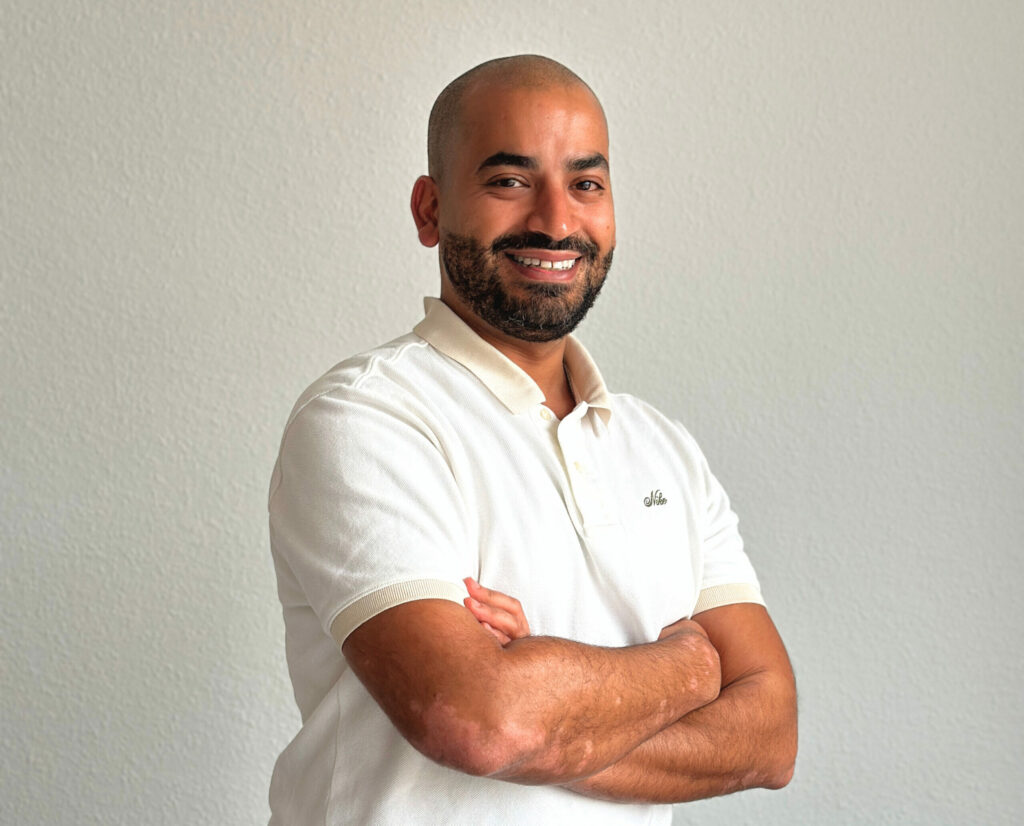
INSIDERS x Zakaria Mansour
CEO & Co-founder at bsport
The fitness and boutique fitness market is undergoing a remarkable transformation post-Covid, with growth rates between 60-70% for specialized boutique studios like yoga, Pilates, and indoor cycling, contrasting with a stagnation in traditional gyms. This shift highlights a consumer demand for personalized, results-driven experiences over generic fitness centers.
At the forefront of this revolution is bsport, a company laser-focused on empowering boutique fitness studios to thrive and expand internationally, now with over 70% of its client base outside France and more than 20% beyond Europe.
Leading this dynamic venture is Zakaria Mansour, CEO and co-founder, whose visionary leadership unlocks new growth avenues while cultivating a strong, ambitious company culture across multicultural teams.
INSIDERS with Zakaria Mansour, let’s dive into another fascinating interview!
Hi Zakaria, great to have you with us, thanks so much for making the time! How would you sum up your role as CEO in one sentence?
My job as CEO is essentially to unblock every obstacle the company faces and find solutions to move to the next stage. Day-to-day operations run smoothly and aren’t my primary focus. Instead, I concentrate on facilitating interactions between departments and stepping in to arbitrate where needed. My main mission is driving growth from zero to one, identifying the next growth phase rather than simply maintaining what already exists.
What are the key growth trends and figures shaping the fitness industry today?
We’re seeing growth rates between 60 and 70%, but that’s mostly in the boutique fitness market. The general fitness market is growing very modestly, around 2%, which is close to inflation. Meanwhile, traditional gyms are shrinking by around 8 to 10%. The shift is toward boutique studios offering personalised service and measurable results, as opposed to the more generic, factory-like gym model. Post-COVID, this trend accelerated, especially in France, Germany, Italy, and Spain, where boutique fitness is growing at roughly 10% CAGR.
Is the fitness market simply premiumising, and how does that shift affect consumers' leisure choices?
Absolutely, the market is premiumising and transforming into more of a leisure experience. The real competition for gyms nowadays isn’t other gyms; it’s the people who opt out of sport entirely. Consumers now choose between going out or attending a Pilates class or an indoor cycling session, it’s become a social and experiential event. The numbers confirm the trend: 78% of boutique fitness members want more than just classes: massage (59%) and sauna (55%) are among the most requested add-ons. Beyond workouts, wellness elements like saunas and cold plunges are emerging from the US and gaining traction here, turning fitness venues into social and even business hubs in their own right.
The real competition for gyms nowadays isn't other gyms: it's those who opt out of sport entirely. People now choose between going for a beer or attending a Pilates class. It's become a social and experiential event.
How do these market shifts impact product development at bsport?
At bsport, we remain laser-focused on the boutique fitness segment, yoga studios, Pilates clubs, indoor cycling venues, because we want to be the best in this vertical. We don’t dabble in multi-modality centres like Equinox, with café areas or complex food service operations, because that dilutes our focus and complicates the technology stack. To keep growing, we now target larger international markets, over 70% of our clients are outside France, and 20% are outside Europe entirely.
How are you tackling cultural differences while expanding internationally?
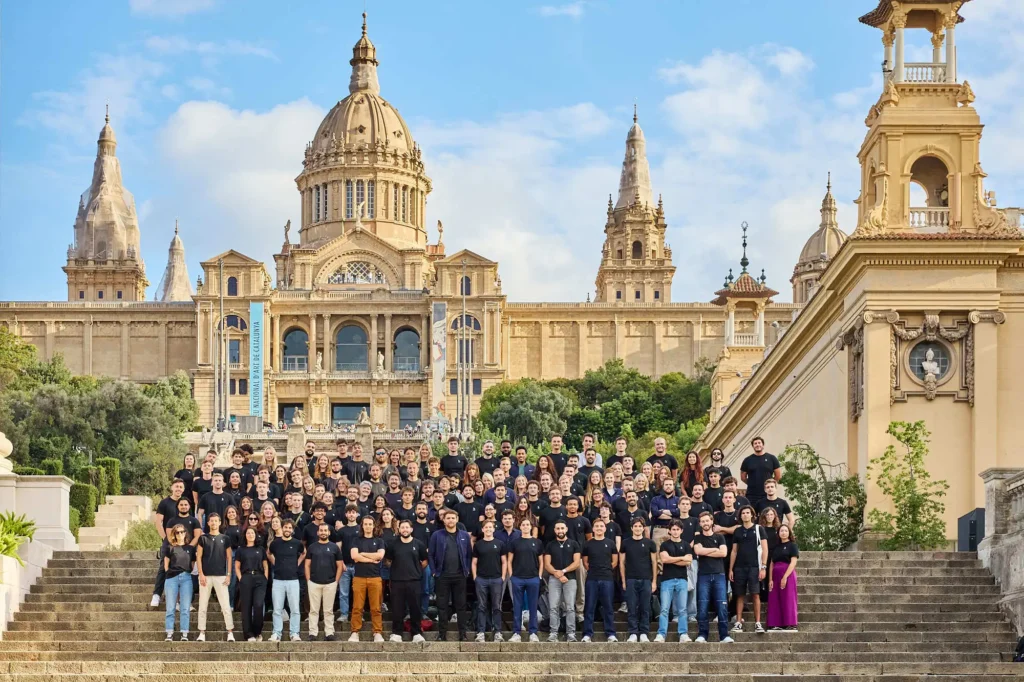
Our diversity is a key strength, as we have native talent for each region. When addressing Germany, we hire German speaking, local, people; for the Netherlands, Dutch locals, and the same logic applies across our markets, in US and APAC too. We are a truly global company. These people know the culture, the industry, and the pain points. They help us experiment with approaches that are genuinely tailored to each market, rather than a one-size-fits-all model.
How do you build and maintain company culture in a multicultural, high-growth company with multiple offices?
It’s genuinely challenging. We built the company culture in “circles”, one circle expanding into the next, and that worked well up to around 120 to 150 employees. Now, at 220 people, we face a new set of challenges. One key lever is equity: 10% of the company is owned by employees, which aligns everyone’s interests financially. We’re also transitioning from being “industry pirates” to becoming an established company with defined processes, structured training programmes, and a stronger emphasis on communication and management. That attracts a different kind of talent, people who value stability alongside growth.
How has your management style evolved as the company grew?
In the early days, decisions were spontaneous, made over an informal chat. Now, with a much bigger team, we have to clearly map the vision and articulate each step, communicating deliberately through committees and formal presentations. It’s less fun, but it’s necessary. We’re also more conscious of the expectations of the newer generations of workers, who expect trust, flexibility and work-life balance incentives, something that was a challenge during our first start-up years when everyone was stretched. As we scale, I’ve been focused on creating this harmony, and the shift is improving our retention rates and transforming our culture.
What kind of profiles are you recruiting the most right now?
We look for ambitious young talent who want to prove something to themselves and grow. Jessica, for instance, joined as an SDR at 22 and has since driven significant go-to-market acceleration, taken on major responsibilities, earned equity, and reached a manager-level salary. We offer real growth opportunities, there’s no ceiling on scope if you’re driven enough to push for more.
What do you pay special attention to during interviews?
I always ask one question: “Why do you get up in the morning?” It’s a way to uncover what truly drives people. Everyone needs a purpose, something to hold onto, especially when things get tough. I’m less interested in the specific answer than in finding candidates with real resilience and drive. People who have no clear purpose tend to see their job purely as a paycheck, and that shows when the pressure is on.
I always ask one question: 'Why do you get up in the morning?' I'm less interested in the specific answer than in finding candidates with resilience and drive.
What rare skills or attitudes do you most value in your teams?
I might sound old-fashioned, but I value people who prove themselves first. Too many people believe they’re owed something before they’ve demonstrated what they’re capable of. My head of sales, Arthur, started with me six years ago as an intern at 25 and worked his way up. I believe in starting from zero every day and building forward, having a track record and continuously proving your worth, regardless of seniority.
What message would you send to the global sports industry?
The sports industry is growing fast, but too many players are focused on passion and neglecting the financial bottom line. You can love what you do, but you also have to make money from it. Entrepreneurs often obsess over their product while failing to grasp distribution, cost of acquisition, customer lifetime value, and P&L fundamentals. The best product in the world means nothing without effective distribution and financial sustainability. Sport is not an excuse for a business that doesn’t work.
PE, co-founder & CEO at BOOST
Sign Up
Forgot Password
Cart
Your cart is currently empty.