01 International wholesale drives the momentum
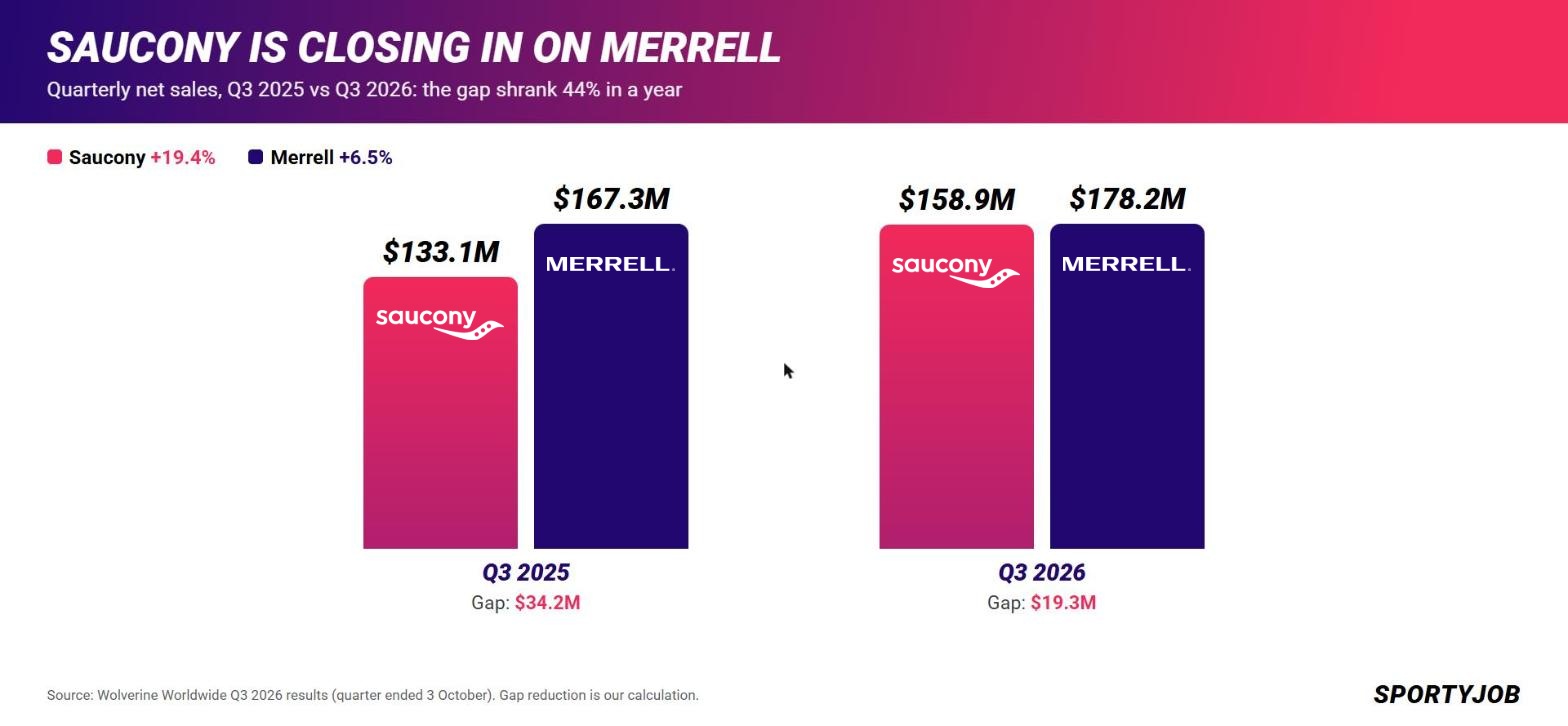
Saucony posted $158.9 million in sales for the quarter ended October 3, 2026, up 19.4% year-on-year. That makes it the fastest-growing brand inside Wolverine Worldwide, which reported group revenue of $505.4 million, up 7.5%.
But the headline figure only tells part of the story. Wolverine Worldwide’s international sales grew 11.7% in Q3, faster than the group’s overall performance. For Saucony specifically, wholesale outside the US grew faster than at home, according to CEO Chris Hufnagel.
The brand’s direct-to-consumer channel posted mid-teens growth, its best quarter of 2026, with Saucony.com leading the way. The rest of the world is driving momentum more aggressively than the domestic market.
Merrell, historically the group’s largest brand, grew 6.5% to $178.2 million. The gap between the two brands narrowed from $34.2 million a year ago to $19.3 million this quarter.
02 Europe’s key city strategy delivers double-digit lifestyle growth
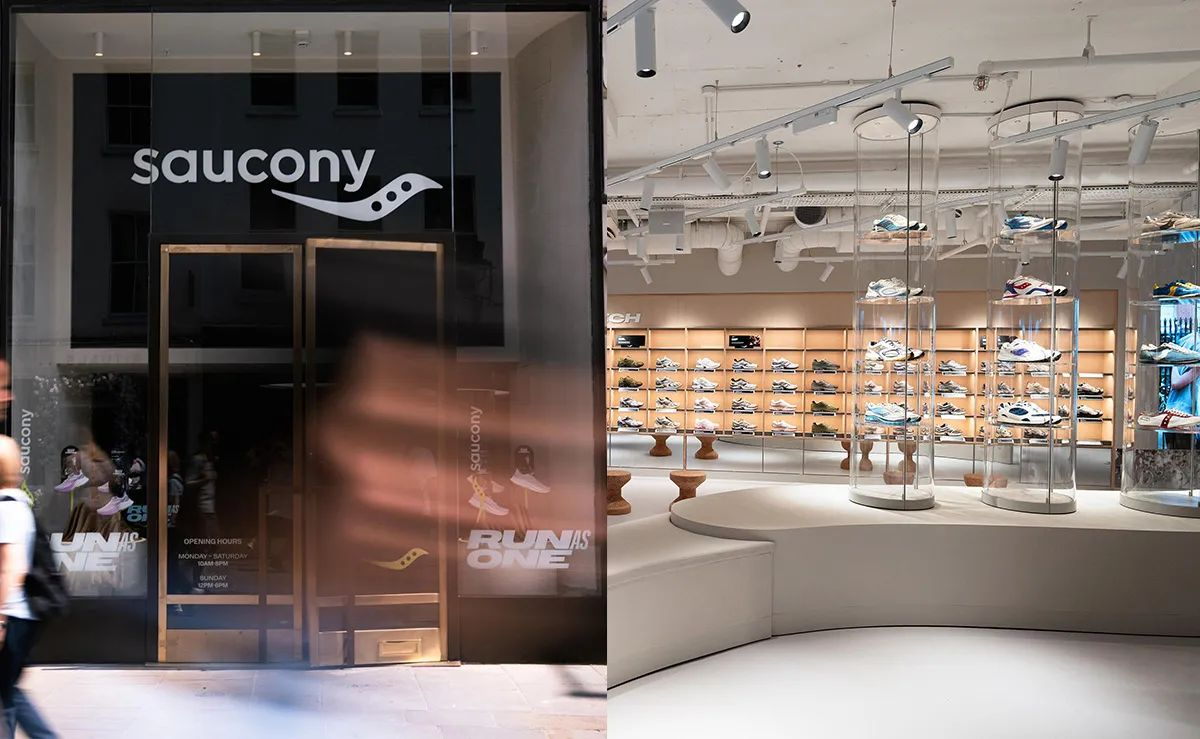
Saucony’s lifestyle business continued double-digit growth in Q3, led by EMEA wholesale and DTC. Management directly connects that performance to the brand’s key city strategy in London, Paris and Berlin.
The playbook combines race sponsorships, physical retail presence and community events. In London alone, Saucony backed the London 10K and the Shoreditch Half Marathon during the quarter. The brand’s ProGrid Omni 9, Guide 7 and Ride One styles are gaining traction in these markets.
Europe is where the lifestyle side of the business grows fastest, and where the brand is building cultural relevance beyond performance running. Management has already signaled plans to expand the key city strategy into the US and Asia Pacific in 2027.
The infrastructure, talent and go-to-market model that worked in London, Paris and Berlin will need to scale.
03 Saucony could overtake Merrell within five quarters
If Saucony maintains 19.4% growth and Merrell holds at 6.5%, the gap closes fast. At current rates, Saucony could overtake Merrell as Wolverine’s largest brand within the next four to five quarters.
That projection assumes consistent execution, no major market disruption, and continued international momentum. But it raises a concrete operational question: what does Wolverine need on the ground to support a brand growing three times faster than the one it’s about to overtake?
Saucony is no longer just a growth story. It’s becoming the growth engine. The question is no longer if, but when and how the brand takes the lead inside the group.
04 Conclusion
Saucony’s Q3 performance signals a structural shift inside Wolverine Worldwide. International markets are outpacing the US, lifestyle is scaling through targeted city strategies in Europe, and the brand is on track to become the group’s largest within a year. The challenge now is operational: scaling the infrastructure, talent and go-to-market model fast enough to support a brand growing three times faster than its peers.