
Running has never been in better shape. Asian groups are moving on European brands and the line between performance and lifestyle keeps fading. For the people building brands, stores and teams in this industry, the ground is shifting fast.
To make sense of it, Kenza LIGUÉ, Head of Outdoor at BOOST, sat down with Jean-Marc DJIAN, multiple Board member of sporting goods industry companies, who has followed the footwear business closely throughout his career. He gives us his view on the market, on what sets the brands that win apart from the ones that should worry, and on how communities are really built.
He also tells us which jobs and skills will matter most in the years ahead.
INSIDERS with Jean-Marc Dijan, Let’s dive into another fascinating interview.
“On Running is a masterclass in vision, execution and playbook”
Hi Jean-Marc, great to chat with you. Let’s start with the big picture: how do you see the market today?
Today it’s the golden age of running, not yet of outdoor. On the consumer side, running has never been in better shape. London Marathon had around 1.5 million people applying for bibs. Paris is crazy too, even with a lottery and all the reservations that come with it. We’re at a pivotal moment.
On one side, traditional brands (eg: Nike, adidas) are fighting to keep their market share and their relevance in performance, after stretching distribution and cultural positioning to the maximum. Look at Nike. It forgot its consumer and forgot to innovate. It went all in on direct-to-consumer and merchandising, and lost sight of its core: being the leader with an outsider mentality, which means innovation. It’s now in a cycle of return to product, and it will succeed. adidas is already doing a much better job.
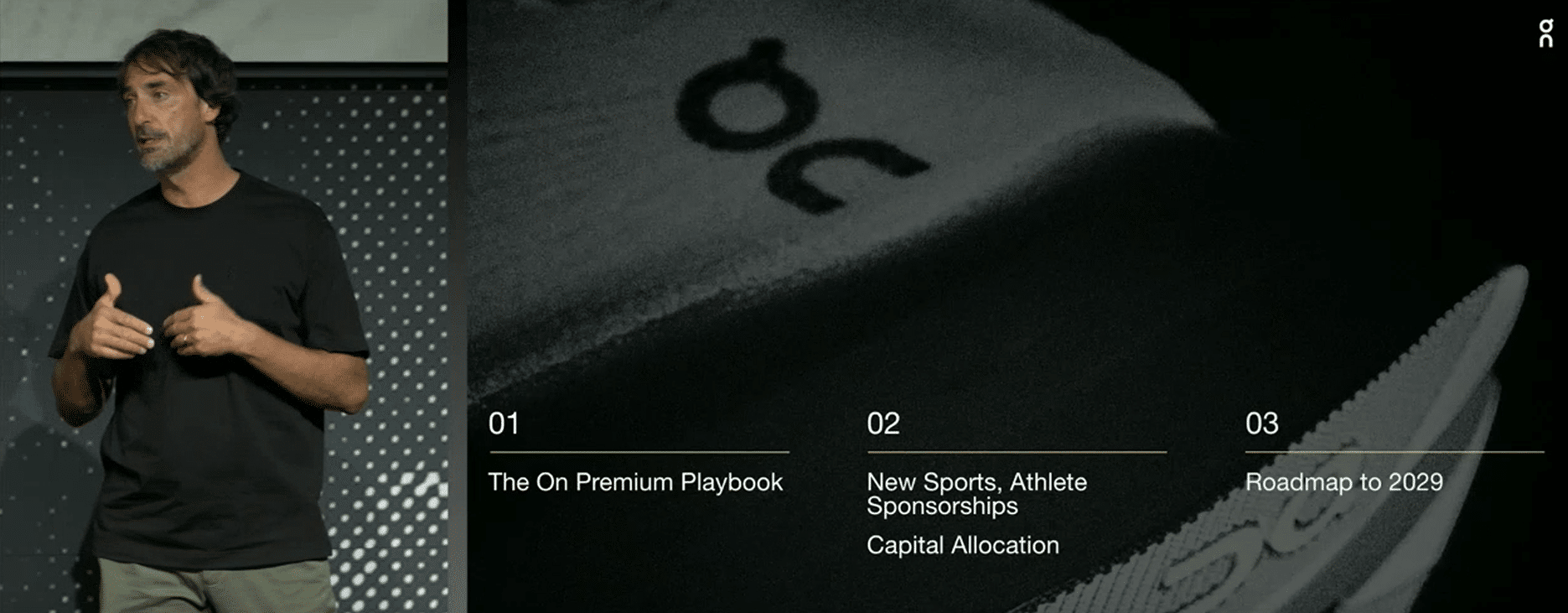
On the other side, what I find most interesting over the last ten years is the emergence of new brands. On and Hoka shook up the established order, and Salomon rode the wave of the new urban silhouette, even if some fatigue is probably coming. On and Hoka look like the same genesis, but they don’t pull the same levers at all. On does everything perfectly, with crazy discipline. A product that has won over the travelers in airports, and an unprecedented investment in sport and innovation. LightSpray is the spearhead, but there is a lot of technology behind it, and discipline in how the brand is built, in apparel, in retail, and in opening new categories: tennis, then football, golf.
By discipline I mean a very clear vision, and a whole machine behind it. I recommend everyone watch On’s Investor Day replay. It’s a masterclass in vision, execution and playbook, very Swiss. If you’re willing to lose two to four hours, it’s exceptional.
“It would be a mistake to think the Asian and Chinese consumer isn’t a practitioner”
The Asian market is rising fast. How do you measure its impact on western brands? Is it a market more oriented toward urban culture and less toward performance?
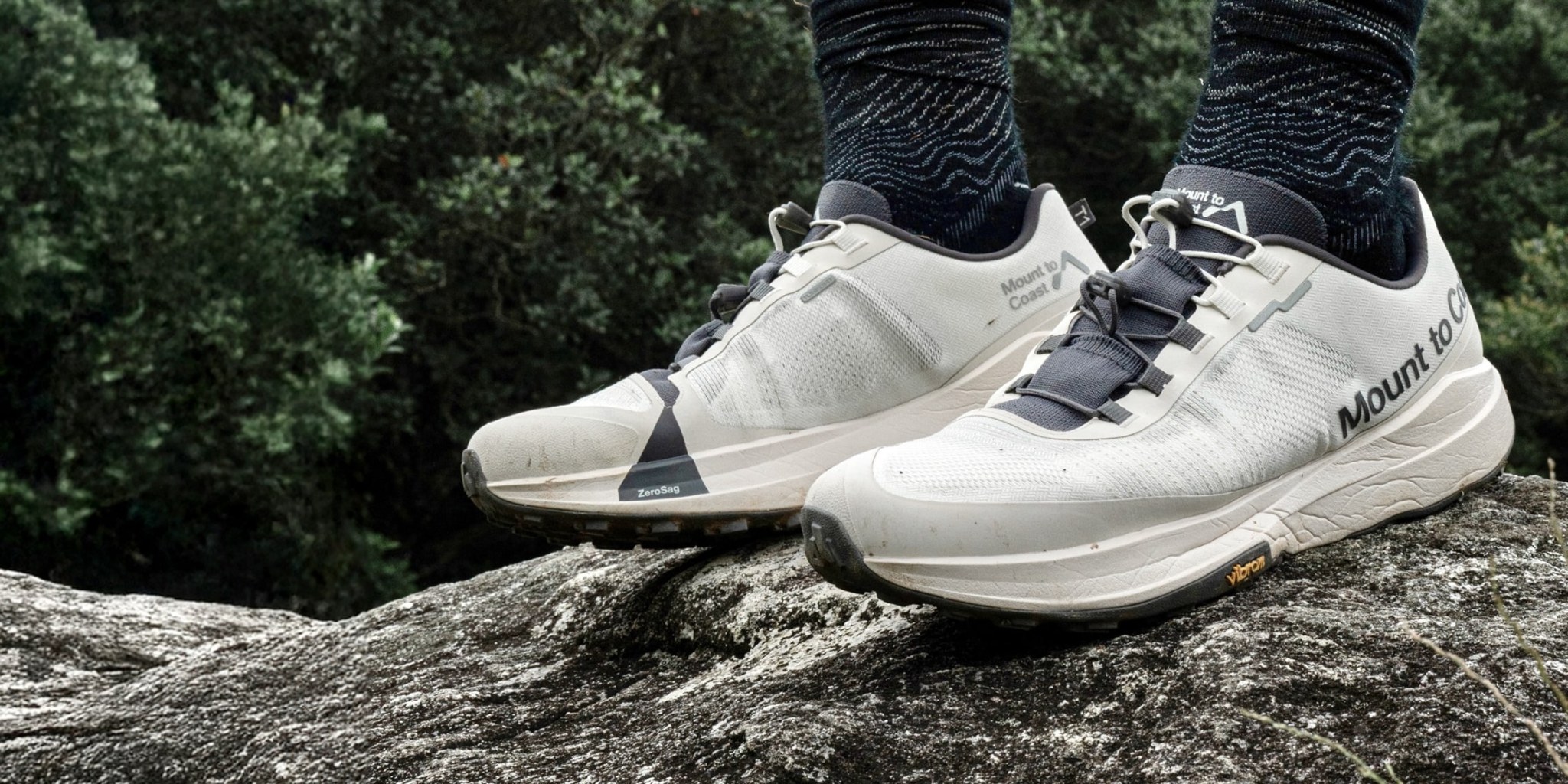
Asia is the third force reshaping the market. Its influence has been growing for years, but it has been very visible for the last two or three years: at UTMB, on marathon start lines, at the Tor des Géants, Asian footwear brands are everywhere ! Mount to Coast, Anta, Fuga / Kailas, Lining, Xtep…get used to those brands who are dominating in China and become highly relevant in Europe.
The big question for European brands is “who’s next?”, meaning who will end up in the orbit of a Chinese group. Salomon and Arc’teryx are already there, and Anta is doing incredibly disciplined work to scale them while keeping the brand DNA. Mammut is with CPE. Authentic European and Scandinavian brands can follow the same pattern. The challenge for brands is to keep performance and authenticity while going after volume.
As for the idea of a more urban, less performance-driven market: not at all. It would be a mistake to think the Asian and Chinese consumer isn’t a practitioner. They may have different tastes or re-interpret the product differently, but what works in China today are authentic brands with very specific attributes. An Arc’teryx Alpha SV is a highly technical, high-performance product. It will go out on the street, of course, but that’s what people are looking for: authenticity, performance, quality, and a story. Same for a Salomon XT. Buying Mammut is buying a piece of Swiss heritage, so it works.
“Sports brands and retailers should learn from what is happening in luxury”
The line between performance and lifestyle is getting thinner. Does that have an impact on distribution?
The line is indeed getting thinner. A brand or a product without a story, even a very good one, will be hard to sell. Sports brands and retailers should learn from what is happening in luxury: how it presents, how it sells, how it merchandises. The movement has already started. Silhouettes, meaning consumer silhouettes, are now key, and major sports and outdoor brands have understood that creative direction is one of the most important jobs, something that used to exist mainly in luxury.
In distribution, it’s already happening. In France you have Distance, Quatorze Running, even iRun and Ekosport with their corners. Even in the heartlands of outdoor sports, retailers are evolving towards a more curated approach, telling stories through their product selection and bringing in niche brands that resonate with both sport and culture. Take Ravanel and its flagship Sentier Store in Chamonix. Initially built around a Nike ACG shop-in-shop concept, the store is experimenting with new ways of presenting products, while introducing culturally relevant, niche brands such as Satisfy, Norda, Compressport, Altra and NNormal. Or Snell, also in Chamonix, which has completely redesigned its trail running floor, taking the retail experience to a whole new level. The most specialized, core and authentic retailers are starting to see things differently. Often it’s a new generation, the children who took over at Ravanel or Snell, arriving with the idea that sport, performance and culture are one and the same.
For a brand to avoid a split between performance and lifestyle internally, it comes back to the same thing: a very strong brand vision, and a very strong creative direction.
“You don’t create a community. The best brands are distinctive brands that speak to an existing community”
Is there a brand that has done better than the others at building a truly active, engaged community?
First of all, you don’t create a community. The best brands are distinctive brands that speak to an existing community. They found their niche and managed to grow. They have a technical and cultural point of view, and they let people identify with them and feel valued, first as pioneers and then as the community grows. We often say Salomon created trail Running. No, trail was there long before. Salomon invested, empowered people and developed it, but the groundwork had been done.
A brand that fascinates me for its communities is Maurten, in sports nutrition. It started with a community of scientists, researchers and chemists, then built a community at the highest level of athletic performance. Marathon athletes, the number of times they’re in Iten, Kenya, following the elite groups. And by ricochet, they are in contact with future talent, managers, brands, practice venues and the epicenters of the sport. Same in trail running, same in cycling. They don’t show up on the general public’s radar, but they have become unavoidable for champions and everyday athletes alike. They solved a real problem, how to eat during a huge effort, and they stayed at the heart of their core community, widening it but not dumbing down. People come to them.
Satisfy is another example: cultural, but with a very high standard of belonging and product, without compromise. Many now try to imitate it. It speaks to a community of people who used to be left out: those who didn’t see themselves in running because it wasn’t made for them, or who found it ridiculous to dress like a runner. They identify with a counter-culture where life, culture, musical tastes and running are one, not two. Many try to do the same but miss the essence of the brand, because it’s hard to replicate.
“People capable of translating the brand into distinctive and cultural signs”
Which jobs do you see as the most important in the industry today?
Several areas are becoming key in outdoor and sport. First, creative direction: people capable of translating the brand into distinctive and cultural signs. They create unity across product ranges, categories, sport and lifestyle, regions and consumer types. That translates into experiences on the website, in stores and in retail.
Second, retail, which will be key for the next ten to fifteen years. Many important jobs there come from fashion, luxury and other industries, where the way of telling stories and telling the product will be very inspiring.
Third, the world is incredibly digital and incredibly AI-driven, with creation going three times faster, even a thousand times faster, across design, development, systems, narrative and storytelling. The people who will thrive are those who can make choices, select and create. There is a premium on innovation, a premium on modern craftsmanship, and a premium on knowing what you’re talking about and what you can actually do: how to create a product, test a product, test a service, a connection, an activation, and really do it.
All these jobs are mutating, but there’s an abundance of choices, and the difference will come from your brand and your decisions. What does it represent? What are the signs? What’s the technological, cultural and creative direction? What’s the product that will support it? And finding the right players and the right links in the community.
Take On: if you want to launch in football, you bring in incredible ambassadors, but that won’t be enough because the space is saturated. So you launch LightSpray, because the technology is harder to sell elsewhere but makes much more sense in a football silhouette. There’s a convergence: here is what my brand is, here is the direction, here are the main sports that are growing if I want to be a global brand worth tens of billions. Tennis, running, trail, football, golf: I need to bring a technology and an incredible point of view, plus ambassadors, plus an activation that matches.
If you don’t have that, good luck!