
INSIDERS with Gregory Merguerian
CEO & Co-founder at Bounce
The sporting goods market for racket sports is booming, driven by the explosive growth of padel, especially across Europe. With over 100 million players worldwide combined for tennis and padel, this sector is transforming fast.
Amidst this dynamic landscape, Bounce emerges as a pioneering startup committed to sustainability by making tennis and padel more eco-friendly. Since launching its flagship pressurization tube, Bounce has already sold over 30,000 units and is scaling rapidly with revenue doubling year-on-year.
Leading this inspiring venture is Gregory Merguerian, Co-Founder & CEO, a passionate player and entrepreneur blending hands-on expertise with business acumen to drive Bounce’s success and innovation.
INSIDERS with Gregory Merguerian, let’s dive into another fascinating interview!
Hi Gregory, great to chat with you, thanks so much for making the time! What is your role and journey at Bounce, and how would you describe your job in a nutshell?
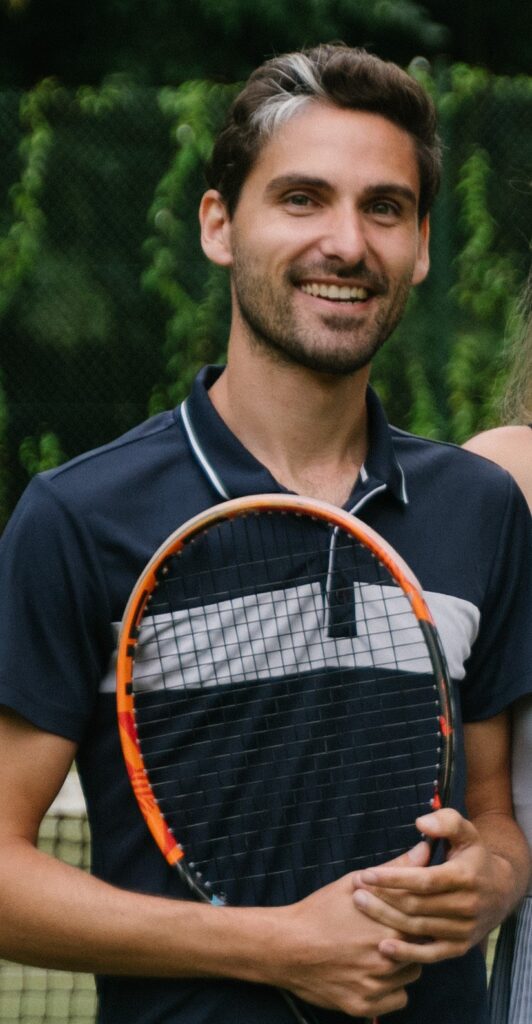
My name is Gregory, and I am one of the three co-founders of Bounce, a startup dedicated to making tennis and padel more eco-responsible. My role is quite multifaceted, I act as a Swiss Army knife, handling sales in specific geographies & distributors. I also oversee operational tasks such as logistics and product shipments, alongside managing financial and legal aspects. It’s a diverse set of responsibilities, keeping me fully engaged day-to-day.
How do you perceive the business landscape of tennis and padel sports globally, and can you share some key figures to illustrate their growth?
Certainly! On a global scale, there are over 100 million tennis and padel players. The U.S. is the leader on the tennis front, while padel remains predominantly European, with Spain leading both in player base and professional ranks. Regarding clubs, worldwide we have roughly 100,000 clubs, with around 35,000 in Europe alone, which represents a significant market share. Major brands like HEAD, Wilson, and Babolat dominate this space, alongside strong French brands such as Tecnifibre, and now Bounce is aiming to carve its niche.
What are the biggest disparities in these markets, especially between countries like the U.S., Spain, France, and others?
The padel market is booming but evolving at different paces depending on geography. Spain has enjoyed about 30 years of maturity in padel, making it one of the most established markets. After that, we saw a development wave during and after Covid in countries like the Benelux, Sweden, and Italy. France jumped on board a few years ago, with Germany joining more recently. So the padel market is somewhat fragmented by maturity levels. Tennis, on the other hand, is a very mature sport worldwide. Its growth is modest but it remains among the top five most popular sports globally.
Would you say padel's rise mirrors tennis' historical growth trajectory, or is it following a different path?
Good question. I’m not sure they are comparable. The rise of tennis was quite different, it was initially an elite sport that democratised through public policies, such as public tennis courts built in numerous French communes. padel’s growth seems driven more by private-public dynamics, with many private investors developing facilities, sometimes causing friction with public tennis clubs. Many cities now have both private padel complexes and nearby public tennis clubs adding padel courts, leading to competition and sometimes heated discussions.
What are Bounce's business perspectives, including current turnover and growth ambitions over the next few years?
Bounce started from a passion for tennis and padel and a shared vision to make these sports more sustainable, mainly by tackling the environmental impact caused by excessive ball consumption. Our flagship product, the Bounce tube, launched mid-2024, has already sold over 30,000 units. In 2024, we generated about half a million euros in revenue; by the end of 2025, we closed at 1.2 million euros. Our plan is to double revenue again across 2026 and 2027, focusing on continued growth and international expansion.
Who usually plays with you in your padel games now that you're part of a growing team?
That’s a fun one! We actually expanded the team partly to fill that fourth player spot on the padel court (just kidding). We work with several people, particularly in France. One common trait with everyone at Bounce is that they’re passionate about tennis or padel. Many of us are friends even outside of work, which helps when you need to find someone to play with. Although, with a few team members currently nursing injuries, even getting three people on the court can be a challenge sometimes!
Can you explain your distribution model and which sales channels are currently the most effective?
We operate an omnichannel model. For the Bounce tube, retail is primary, both physical and online, partnering with Decathlon, Intersport, and especially specialised stores that have expert insight to advise tennis and padel players. We also sell directly to consumers via our e-commerce site and marketplaces like Amazon. International distribution is growing fast because the challenges around ball quality are universal worldwide, despite regional pricing differences. On the club side, we work either through distributors or directly with clubs, providing installation, training, and ongoing support.
What makes working at Bounce unique from a cultural and organisational perspective?
We look for people who are truly passionate about sport, since we operate in a niche where understanding club culture is essential. Sports clubs are unique environments, often run by volunteers, so fitting into this world is important, you can’t show up in a suit and tie. Sustainability is at our core; we prioritise eco-responsibility in everything, from local sourcing to product longevity. We embrace a “low tech is real tech” approach, only adding features when necessary to keep products durable. Customer-centricity guides us; we work closely with users throughout product development to meet real needs, as with our new recycling bins designed with club directors’ input. We also value performance both on the court and in the office, fostering independence and ambition in a small but driven team.
Looking back, what was the single most defining moment in your career that changed everything?
It’s vivid for me. Before Bounce, I was an IT consultant managing agile transformations. One evening in November 2019, playing tennis at Justine Henin’s club with my co-founder Antoine, we noticed the mess of tennis balls, tubes of different brands, many losing pressure quickly. We wondered: why do balls lose pressure so fast? That sparked our curiosity and led us to uncover the ecological disaster behind tennis ball waste. It was a lightbulb moment that made us leave our comfortable consulting jobs to dive into entrepreneurship. We spent two years researching and developing before officially founding Bounce in 2021.
Finally, if you had the floor in front of 35,000 European sports industry professionals, what message would you want to share?
We spent two years researching and developing before officially founding Bounce in 2021. It was a lightbulb moment that made us leave our comfortable consulting jobs to dive into entrepreneurship.
I’d tell them that ball pressurisation systems aren’t gimmicks, they will become standard gear for every player and club. Whether it’s our Bounce tube or another device, optimising ball usage is critical. We want to collaborate with retailers who believe in quality products made in France, designed by players for players. Also, we’re actively recruiting passionate professionals to join our growing team, particularly for international development and marketing/branding roles. Anyone interested should reach out to me for a chat, virtual or in-person. We’re excited to build something meaningful together.
Nicolas, Head of Racket Sports & Football at BOOST
Sign Up
Forgot Password
Cart
Your cart is currently empty.