
INSIDERS with Galahad Clark
CEO at Vivobarefoot
Vivobarefoot was not born from a market opportunity. It was born from a conviction, and a refusal to accept the status quo of the footwear industry.
Founded by Galahad Clark, the brand challenges one of the most deeply rooted assumptions in sport and lifestyle: that modern shoes are designed to make us healthier. Drawing on science, human history and a long lineage of shoemakers, Vivobarefoot defends a radically different idea that most footwear weakens the human body and disconnects us from nature.
In this INSIDERS interview, Galahad reflects on the origins of the barefoot movement, why big brands knew the truth long before consumers did, and what it really takes to grow an independent, purpose-driven company without compromising its beliefs. From culture and leadership to distribution, sustainability and the future of the outdoor industry, this conversation pulls no punches.
Over to Galahad, enjoy!
Hi Galahad! Great to chat with you! Can you explain what is your role of CEO? How would you describe it in this specific company?
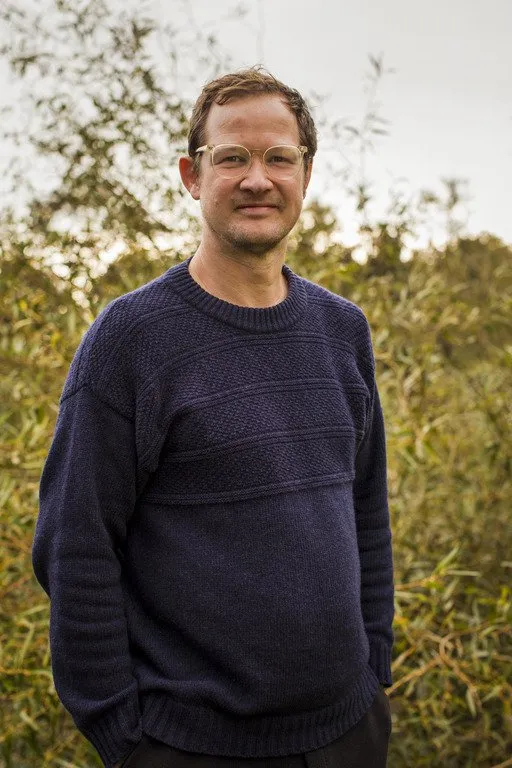
I am the founder of Vivo, so I was employee number one. My role has evolved over the years from doing everything to less and less. There are about 200 people in Vivo now, so more and more of my job is dealing with a lot of different people. I see my role basically as three things. Number one is to make sure we have a good team. It is a never-ending job; the team is changing. Some people that are good from 0 to 50 million are maybe not so good from 50 to 100 million.
Number two is to make sure everybody is singing from the same strategy. This is increasingly difficult, especially as we start to build the brand in America and Asia. And the third job is to make sure we don’t go out of business. We are a very independent, family-owned business. We have no “impatient capital” in Vivo. One of my passions is to build a business and show that not only Patagonia can build a big business and stay true to a purpose.
Going back to the origins of Vivobarefoot, what was the sparking time when you decided that you wanted to create the company?
I was already in the shoe business, coming from a long line of shoemakers. My first shoe brand was a high heel brand called United Nude—the opposite of barefoot. But then a childhood friend of mine, who was into posture alignment and was a good tennis player, realized that shoes were part of the problem. He took a Nike Huarache, cut the sole off, and stitched a tennis racket cover on the bottom. He brought it to me and said, “This is the way shoes should be made.” Originally, we developed Vivo as a patented, very thin, puncture-resistant sole. The original idea was to license this technology to big companies, like a Gore-Tex model. We met with Under Armour and other big businesses. They all said: “We understand the science, we believe in it, but the consumer is not ready”.
So you decided to do it yourself?
Yes. In 2012, we realized if we can’t persuade anyone else to do it, we have to do it ourselves. To this day, it makes me angry. These executives admitted that for kids, the science is black and white: you should let a child’s foot develop naturally. But they still said the consumer isn’t ready. For me, the shoe industry knowingly making products that weaken and deform children’s feet is a serious public health issue that deserves far more attention than it currently gets.
Do you think that consumers are ready now?
"These executives admitted that for kids, the science is black and white: you should let a child's foot develop naturally. But they still said the consumer isn't ready."
They have always been ready. I don’t know a single child that prefers to wear a pair of padded, tight-heeled shoes over barefoot shoes. There are now more than 90 barefoot brands. This is a movement of the people. Merrill told me they are surprised at how fast their barefoot category is selling out online. It is happening via word of mouth because big brands are not advertising it.
What are the barriers? Is it design?
A little bit of fear, a little bit of looking different. If LeBron James is not wearing barefoot, why should I? But it is starting to become a fashion item. We did a shoot with Cara Delevingne at Glastonbury. Luxury brands like Balenciaga and Miu Miu have released barefoot-style sneakers recently.
Do you see major differences between the markets in Europe?
Europe is very different from America. The number one country in the world per capita for barefoot awareness is the Czech Republic and Slovakia. Interestingly, barefoot awareness varies quite significantly across different European countries and cultures, the reasons behind that are open to interpretation!
What is the distribution mix today?
It is about 80% e-commerce, 10% wholesale, and 10% retail. We have about 25 stores around the world. We are just starting in wholesale with big outdoor stores like Schuster, Bever, and REI. We are also growing in Asia. Japan is the fastest-growing market in the world now. They call Japan the “oyster of the world”—it takes the grit from around the world and makes pearls from it. They are taking barefoot and making it even more beautiful.
Can you explain the history of why we wear "normal" shoes?
Humans made perfect barefoot shoes for 99,000 years. It is horse riding that messed up the shoe industry. Humans made pointy shoes when we invented saddles and stirrups, to get feet into stirrups quickly. To have a horse was high status, so everyone started wearing heeled, pointy shoes. When the modern running shoe industry started, people were getting injured running in their shoes. Doctors told them: “The problem is people wear heeled, pointy shoes to work every day. You need to make your sport shoes like their work shoes.” So, all the technology in the footwear industry is there to solve problems caused by the footwear industry. That is the matrix everybody is in.
Coming back to the team, how do you manage to keep the company culture as you grow?
"All the technology in the footwear industry is there to solve problems caused by the footwear industry. That is the matrix everybody is in."
It is a constant challenge. Culture can die very quickly. We have a rule where if you stay for 10 years, you get a six-month sabbatical. We used to do a lot of work taking people out into nature to teach them the philosophy. Professional managers often come in and say, “This costs too much, cut it.” We reduced it for a year, noticed the difference, and are now putting energy back into it.
How do you view the current state of the outdoor industry?
It is a desperate time for the industry. Big companies were taking sustainability seriously up until 2019. Since COVID, they have pulled back all the investment. Adidas, Nike… they are not doing it anymore. Patagonia started making organic cotton T-shirts 30 years ago when organic cotton was 1% of the global supply. Today, it is still 1%. The outdoor industry is supposed to be connecting people to nature, but they are actually putting more foam, more insulation, and toxic chemicals between humans and nature. It is a scandal.
Finally, do you have a message for the industry?
The outdoor industry has a responsibility to connect people to nature. When people are connected to nature, they will look after her more. I would challenge every outdoor business to take that seriously. We are interested to partner with companies that want to “mythbust” the idea that you need support and structure. Ultimately, barefoot is healthier for humans and healthier for the planet.
Sign Up
Forgot Password
Cart
Your cart is currently empty.