
INSIDERS with Bastian Grau
Pickleball Specialist at Joola
The market for racket sports in Europe is witnessing rapid growth, particularly with the emergence of pickleball as a dynamic and fast-evolving discipline. While paddle tennis currently leads in Europe, pickleball is quickly gaining ground, fueled by a vibrant community, increasing infrastructure development, and strategic partnerships.
At the forefront of this expansion is Joola, a renowned global sports brand with a strong heritage in racket sports, now innovating within the pickleball sector. With its roots in the US and extensive European presence, Joola is perfectly positioned to drive the sport’s growth by offering premium equipment and supporting facilities.
Today, we have the pleasure of welcoming Bastian Grau, Joola’s Pickleball Specialist for Europe. Bastian embodies the startup spirit within a large, established company—combining market expertise, proactive partnerships, and hands-on experience as a pro player to accelerate pickleball’s momentum across the continent.
INSIDERS with Bastian Grau, let’s dive into another fascinating interview!
Hi Bastian, great to speak with you today! To start with the basics, can you introduce yourself and tell us about your current role and scope of work at Joola?
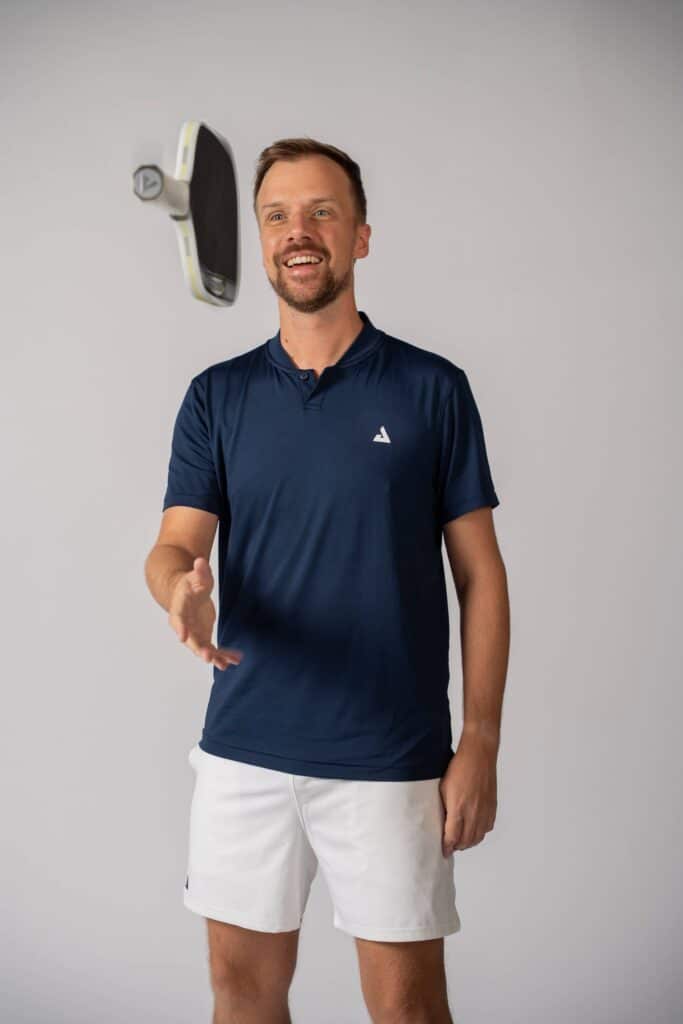
Of course. I’m Bastian Grau, I work for Joola Europe as a pickleball specialist. We cover the entire European market, with a strong focus on sales, partnerships, and everything pickleball-related. It’s such a young sport that it really feels like a startup within a well-established company like Joola.
How big is Joola today?
In Europe, we have 50 to 60 people working on the European market. The global headquarters is in Washington DC, where the team is much larger, 100-plus people. We also have subsidiaries in Asia, India, Canada… It’s a global team organized into subsidiaries that operate with their own decision-making. Joola Europe runs its own business decisions, but always under the umbrella of Joola Global.
And you report directly to a sales or commercial director?
Yes, my direct report is our sales director, and above that we have a general manager — that’s it. It’s a very flat structure, quite family-style. Which is great. And for pickleball specifically, there’s so much to explore, nothing is really set in stone yet. We’re very much learning by doing.
If we step back and look at the racket sports industry in Europe, there seems to be a big battle between padel and pickleball — with padel currently ahead. How do you see that dynamic, and how are you trying to help pickleball catch up?
Padel has a few years’ head start, that’s just a fact. Tennis players seem more attracted to it, partly because of the ball. Tennis associations — in Germany especially — have channeled funding into padel over the last two or three years. Companies have franchised padel facilities, which really helped get the sport off the ground.
Padel also has strong Latin American roots, and the Spanish market has completely exploded. Whenever I go to Spain, I’m blown away by how many courts there are — literally on every corner. But pickleball exploded in the US a few years ago, and now it’s Asia — Malaysia, Vietnam and India in particular — seeing crazy growth numbers. I think it all comes down to infrastructure: wherever you build courts, the sport takes off.
And we're starting to see dedicated pickleball facilities pop up in Europe now?
Yes, it’s beginning. Between planning regulations and funding processes, it takes time. But once that infrastructure is in place, pickleball will be unstoppable — actually, it already is. It just needs a little more time.
Padel works so well partly because every court built is brand new, clean, and professional-looking. For pickleball, we have the advantage of being able to play on any hardened surface — gyms, parks, anywhere. But that also means it’s largely invisible: you set up a net in a gym on Tuesday evening, play, and it disappears. No permanence, no visual identity. You don’t attract young people or tennis players looking for a serious environment.
But when you have proper pickleball courts — with real lines, a proper net, barriers around them — people stop, try it, and within five minutes their eyes just light up. I’ve seen it so many times. We’re very optimistic.
In France, Italy, and Spain, national tennis federations have now embraced pickleball and are investing in it. Pro circuits are emerging — the Pickleball Pro Tour in Spain, events in Italy, and the RTA Finals in Austria in two weeks with the top eight European players. All of this creates content, visibility, and mainstream momentum.
Is the investment coming mostly from private sources, or also from federations and public funding?
In the US, it’s been mostly private. And it worked there partly because they already had hard courts — tennis courts convert easily. In Europe, we have a lot of clay and indoor carpet surfaces where you simply can’t play pickleball. That’s a real barrier. In Asia — India, Malaysia — private money is flowing in, with celebrities involved, team-format events, European players flown over to compete.
I was in India myself last year for a tournament. The Asian players are getting scary good, very quickly.
What are the key markets for pickleball in Europe right now?
The answer is fairly straightforward: the UK is way ahead of everyone else. The American cultural connection is strong, there’s no language barrier, and the link between USA Pickleball and Pickleball England was established early on. The English Open has been running for several years and was the biggest tournament in Europe for a long time. The UK probably represents about half of the entire European pickleball market.
After that, Spain, France, and Italy are pushing hard to catch up. Germany is more complicated — clay courts, lengthy regulations… Germans tend to be cautious, they want to see a return before committing. But we’re starting to see dedicated facilities open up. Stuttgart already has one, Heidelberg opens in two weeks, and there’ll be more and more coming.
Do you also sell infrastructure directly to clubs or cities? What exactly does your service cover?
We provide the equipment — paddles, balls, nets, courts. We can also consult on the setup at the beginning: spacing, layout, that kind of thing. But once they’re up and running, the facility manages bookings and operations on their own. We get a lot of requests from tennis clubs or multi-sport venues looking to diversify, and we’re always happy to guide them.
A common model we see is ‘4+2’ — four padel courts and two pickleball courts. A pickleball court costs around €10,000–15,000 versus €60,000 for padel, with comparable revenue per square meter. The business case is easy once you can fill the courts — and that’s coming.
And the actual installation: is that done by you, or by local resellers?
We have resellers who deliver the equipment, but installation doesn’t really require a specialist. We set up the courts here in a few hours, just two of us, no training needed. It’s genuinely accessible.
In terms of commercial challenges, what's the main obstacle today: Joola's brand awareness, pickleball awareness, something else?
Joola is very well positioned — our paddles are well known, people come to us because they trust the brand. The real challenge is waiting for the market to mature. We’re ahead of the curve, and we’re actively trying to accelerate that growth through strategic partnerships. Once the wave comes, we’ll be in a very strong position to ride it.
Partnerships with tennis federations: is that a top priority?
Absolutely. Some federations already have partnerships with tennis brands that have moved into pickleball. But when they compare the quality of equipment and the level of service, we have a strong case. And above all, we offer real expertise — infrastructure, coaching, full support — that tennis brands can’t always match. And if we ever lack specific knowledge locally in Europe, we can tap into the US team, who have deep experience building facilities and partnerships at scale.
Do you have a rough sense of how many Joola courts are set up across Europe right now?
It’s hard to quantify, because our court product is still very new and a lot of setups are temporary — we put courts up for events and take them back down. Next week at Arlberg we’re putting six courts in a ski hall for nine days: clinics, school sessions, a tournament, an amateur event — then we pack everything up and bring it home. Courts at Arlberg were setup in the Center „WellCom“ built for Ski World Cup back in the days. Now it’s used as a convention/event center. We have partnerships with five or six permanent facilities in Europe, which probably adds up to around 30 to 40 Joola-branded courts. But our connections go well beyond that.
What's it like working at Joola day-to-day, the atmosphere, the culture?
It’s a fun environment, but weekends are rare. I’m constantly on the move — last year I think I barely spent a weekend at home. I also play on the pro circuit in Europe, which gives me direct connections with players, facility owners, and tournament organizers.
The pickleball world is still very small — everyone knows everyone. That means I get approached as the Joola person at almost every event, which can be intense. But I’ve turned my passion into my job, and even if I sometimes need to hit pause, it’s an incredible opportunity.
How did it happen ? Did you come from Joola and discover pickleball, or the other way around?
The other way around. I was studying in the US on a running scholarship. After finishing my studies, I did an internship in Atlanta to complete my master’s degree, and that’s where I found pickleball. I was done with running — too rigid, too demanding — and after four or five months without sport, I tried pickleball. An older guy taught me the basics; he couldn’t move much but I had the athleticism, and it was a great combination.
I lived in Atlanta for nine months, worked for a sports startup that still exists today — PrizePicks — and when I came back to Germany just before COVID, I brought pickleball with me. There was practically nobody playing in Europe at the time, no international tournaments, nothing. The first event was in Denmark — we lost in the group stage to a Swedish couple, then won the whole tournament. Those connections from that day — the Swedes, the Spanish players — are still close friends today.
I’d approached Joola for a sponsorship, they said yes, and I gradually became their informal advisor on the European pickleball market. When I decided to leave my job in automotive sales, I had a few conversations with the general manager and the CEO, and it came together fairly naturally.
Was that the key career move, reaching out to Joola for a sponsorship?
That, and also deciding to leave automotive sales without having anything lined up on the other side. I gave three months’ notice and told them I was going to do pickleball full-time. Everyone thought it was crazy. But automotive sales is a grind — you’re working for fractions of a margin, it’s a pure volume game. I knew I couldn’t do it long-term.
I used that month without a job to travel, spend a few weeks in the US, reconnect with people. It wasn’t wasted time at all. And Joola came shortly after. I think if you’re genuinely heading in the right direction, opportunities find you. Being unemployed for a month or two doesn’t ruin your life — it can actually set you on the right path.
Last question: you have an open mic to 30,000 sports and outdoor industry professionals across Europe. What do you want to say?
My first message is simple: play pickleball. Try it. It’s a new sport, but it’s incredible — the social aspect, the competition, the inclusivity. It’s massively underrepresented in Europe, while in the US and Asia it’s everywhere. Give it a chance, and it will blow your mind very quickly. I’m convinced it’s here to stay — and it’s going to grow faster than anyone expects.
Thanks for your time Bastian!
Sign Up
Forgot Password
Cart
Your cart is currently empty.