
INSIDERS with Bart van Driel
International Sales Manager Northern Europe for Julbo
From a tiny village in the Jura Mountains to outdoor playgrounds all over the world, Julbo has built its reputation by sticking to one thing: protecting eyes and heads, whatever the terrain or the conditions.
Founded in 1888, the brand carries a strong mountain heritage while constantly adapting to new practices and new uses, from mountaineering to cycling, running, sailing, and even lifestyle. Today, Julbo stands at a crossroads between tradition and transformation: family roots, a new shareholder, a growing optical business, and changing consumer behaviors.
In this INSIDERS interview, Bart, International Sales Manager for Northern Europe, shares what it really means to run a brand locally with a “one-man team,” how Julbo balances technology, design and retail experience, and why culture, sustainability and long-term commitment still matter in a fast-moving industry.
Enjoy the read, we’ll let Bart take it from here.
Hi Bart, great to speak with you today! Thank you very much for taking the time. Maybe to start, can you introduce yourself quickly and tell us what your current scope is at Julbo?
My name is Bart, and I have been the Country Manager for Holland for 12 years, and recently I’m International Sales Manager for Northern Europe. I am responsible for the whole story of Julbo within the country. It is not only sales; it is marketing, communications, events, expos—everything happening here. It makes sense that I take part in it, so I wear multiple hats.
And how big is your team in the Netherlands?
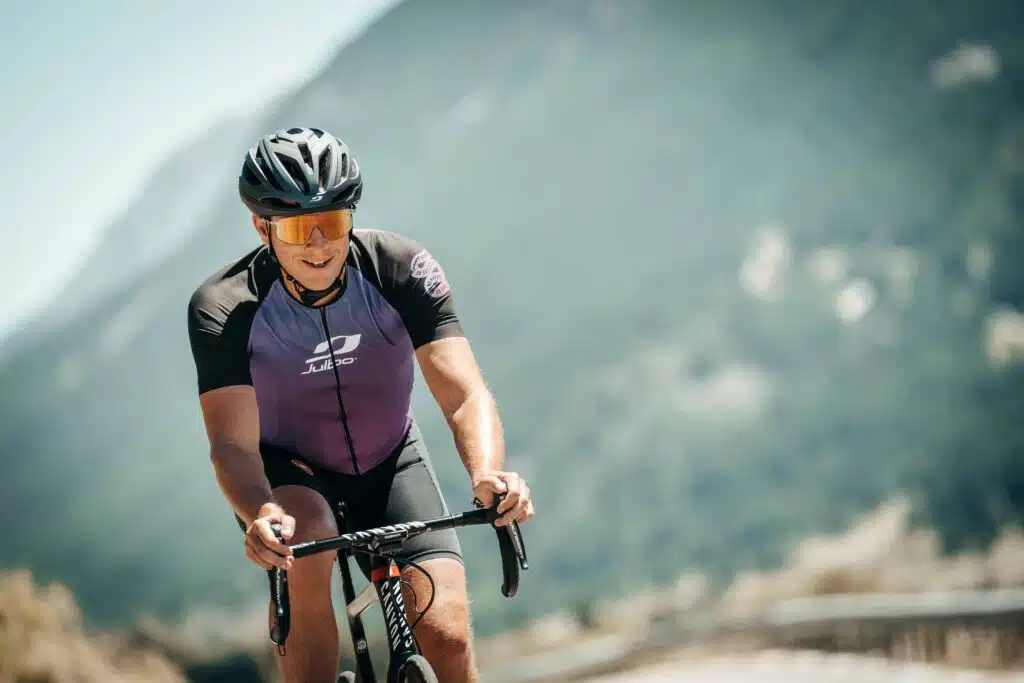
My team is me, myself, and I. It is a pretty intense team! But after 12 years, it is working pretty well. We have bigger teams in bigger countries like France or Germany. The cool thing is that I am responsible for all directions: not only sports but also the optical part. Since a few years ago, we are also going deeper into the bike scene. It takes a little bit more time than we are used to, but we are there with a full package including helmets. You need to work like a chameleon to be everywhere in the different approaches.
"You need to work like a chameleon to be everywhere in the different approaches."
Can you tell us a bit about the company history?
The company has existed for a really long time. We are based in the Jura Mountains, from the Alps, since 1888. We are still based in a tiny village called Longchaumois. Until about two and a half years ago, the company was still owned by the two brothers. As the next generation took other decisions, they sold the company. We are 2,5 years part of the Peugeot Frères Industry (PFI) group, which owns four or five other companies in France.
Did that change anything?
On one side, yes, it is a big change going from a family company to being owned by an investor. We have a new CEO and we are restructuring things to go to the next step. But in the basics, it is the same people, the same management, and the same family spirit is still there.
What are the key categories right now, in terms of sports and outside of sports?
Our history and roots are in the mountains, both summer and winter. Mountaineering glasses and classical versions like the Vermont with the leather shields are still a main part. However, you see a big transition to all kinds of outdoor sports: cycling, running, sailing, and we are trying to enter golf. Our main message is that our Reactiv technology is really suitable for outdoor sports. We don’t really do indoor sports. The other direction is Optical. We have normal optical frames, and we have sports frames produced with prescription lenses. We are the only manufacturer doing this in-house in our own laboratory.
Finally, we do a lot of goggles and helmets for winter sports and mountain biking. We focus on the protection of the head and eyes—don’t ask us to produce clothing or bags. We stick to what we do best.
What are the major trends you see in how people buy glasses or goggles?
Online business is still growing, and in certain parts of the world, faster than maybe we would like. But we still have a very big base of traditional offline shops. These products have a story and technology behind them, so we need people in-store to explain and sell them at a mid-to-high range level. The offline part is still by far the majority.
We see more people wearing sports glasses for everyday lifestyle in cities. How do you manage that?
We see it, especially with younger people going to festivals. It is becoming more “altering”—not only functional eyewear but design is important. You even see people wearing our classical frames with leather shields in urban settings. We are trying to go a little bit deeper into this lifestyle segment with a different approach, likely targeting the optical business and social media more than traditional sports shops. However, designing for this is difficult because tastes vary; an Italian mood board is very different from a German one. We need to find a balance between a “one size fits all” approach and niche products.
What is the company culture like at Julbo?
I have been working here for 12 years and I feel I will never leave. There is a huge family spirit and a sporty spirit. A big part of the team has been working for the company for many years, starting from a young age. We also have a focus on sustainability. We produce 70-75% in Europe and have our own production plant. We work with materials like castor beans. Our footprint is low, but durability/sustainability can never affect quality. Quality needs to be accurate at the first step. To give a concrete example of the culture: we have a “Julbo House” near the office. Colleagues coming from Paris or elsewhere can live together in this house for a few days instead of a hotel. It’s a cool way to bond.
In terms of your own career, what were the big decisions that helped you get this position?
My rule is: if sports is within my career, I will find a way. The key moment was a tip from a close friend. He was a former distributor and notified me that Julbo was stopping with distributors to go direct. He told me, “This is something you should do.” That was the golden tip at the right moment. The network helps.
Do you have a message for the 30,000 people in the sports industry listening to this?
"If you do what you like, it doesn't take energy — you get energy in return."
Just have fun. Try to have fun in a different way; it makes your job and collaboration easier. Smile now and then. Don’t only take care of figures and margins. If you do what you like, it doesn’t take energy—you get energy in return.
Sign Up
Forgot Password
Cart
Your cart is currently empty.