
We met Hervé Domenighini, EMEA & APAC Sales Director and board member of Equip Outdoor Technologies, owner of British outdoor brand Rab, at ISPO. He talks about market shifts, how their five-year plan is going to deliver +40% in 3 years, B Corp certification and what it takes to build a global top-tier employer, all with one constant: a brand that is made for the mountain people.
Hi Hervé, great to chat with you. There is a huge positive trend for outdoor activities (as we can see around us here at ISPO), what is Rab’s difference in the market?
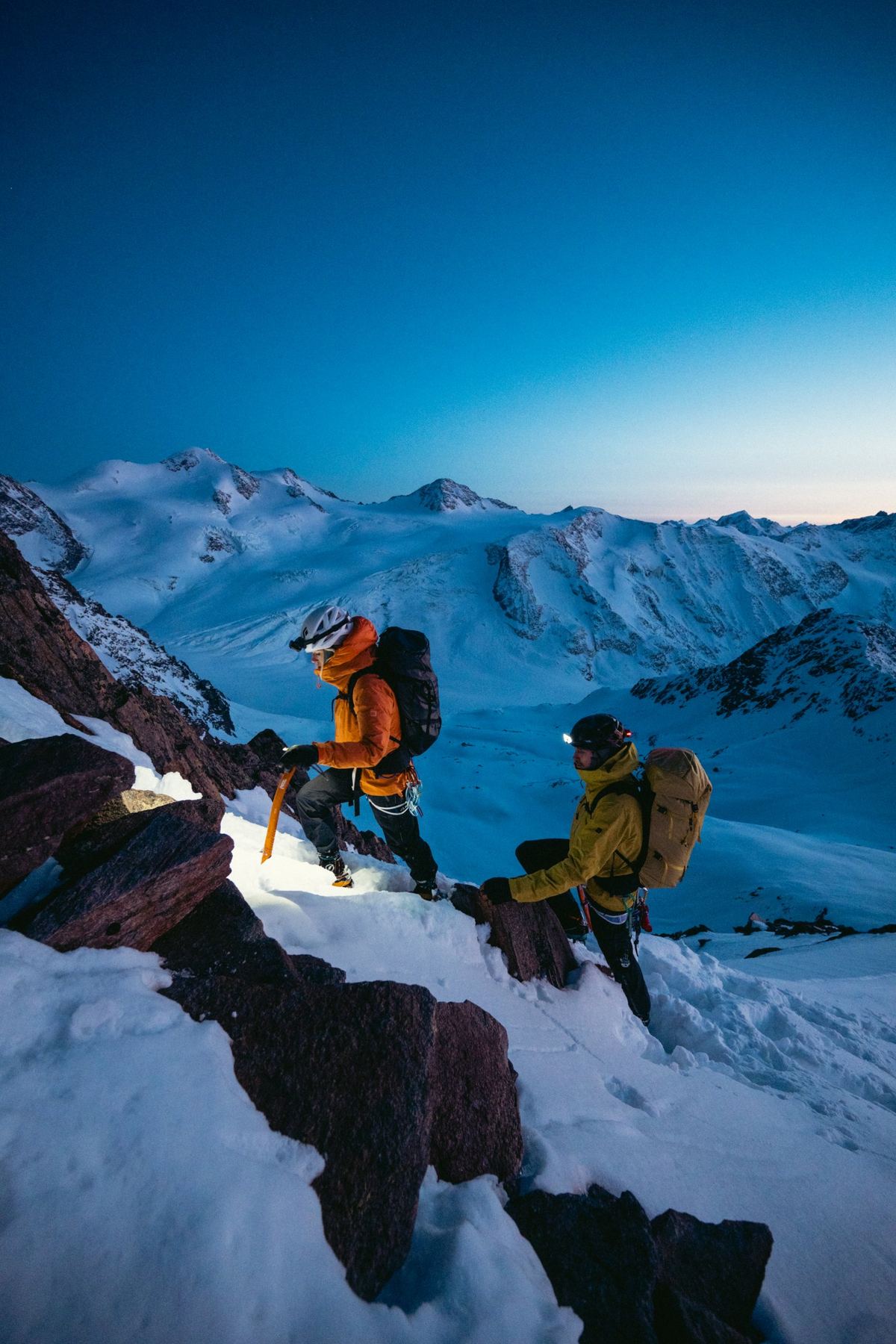
People are enjoying the outdoors more than ever, and a new generation is discovering it in new and different ways. Outdoor culture has also become increasingly part of everyday life. But Rab has a very clear position: we are a mountain brand, built for mountain people. Technicality and performance are our starting point, and we don’t want to lose sight of that. It shapes how we design our products, how we communicate and ultimately how we show up as a brand. The Microlight Jacket is a good example. It has the technical performance I need to wear it on top of Mont Blanc, but it’s versatile enough that it can be worn on an everyday-hike. That versatility comes from designing a really good technical product first, rather than starting with lifestyle. Our customers will always use our products in different ways, and we embrace that. But whether it’s a highly specialised piece of equipment or something with broader everyday appeal, the product and the story behind it always begin in the mountains.
“We stick to the core: we are the brand for the mountain people.”
How do you approach local relevance versus global consistency?
What we see is that Europe is a far more mature market for us. We started in the UK and expanded across Europe, so we know the consumer better here, and that drives our internal development, product and so on. In Asia, it’s really specific by territory. We often talk about “the Asian market”, but it’s not that straightforward, and there’s a risk of stereotyping. The way brands do business in Japan is different from China, and different again from South Korea, just as the European market is not one market. Within our company, the focus used to be very British. Now we’re becoming a global player, and I’m European myself, so the cultural and language differences are always interesting. You cannot copy-paste the playbook from one country in Europe to Asia or North America. That doesn’t work. For us, it was important to identify the activity we want to focus on, but also the consumer.
Japan works with a lot of specialist stores, and people love the details and technicality. They want to talk about every feature of the jacket. In other markets, it’s more about following trends, including brands that make very technical products but are also worn in the city. You have to capture that and find your own way. Distribution is completely different too. In China, there’s an enormous live-streaming market, with 24-hour live streaming for almost any kind of product. It’s always a big surprise because you can hardly believe it. You go online, and suddenly thousands of people are asking questions during a two-hour live session: about the products, the brand, where to buy, and also broader or unexpected questions, because that’s part of the game too. It’s fascinating, and very different from what we’re used to here. In South Korea, there’s a very big hiking and climbing community. We sell products there that are very technical and designed for high altitude here, but there they’re also bought by more everyday hikers, because winters can be very humid. So we adapt the way we sell products, but not our collection.
Despite all the regional nuances, it is important to us that we apply a consistent global approach, reflected in a consistent brand presentation, so you recognise Rab wherever you experience the brand.
Let’s talk Equip’s results. You just achieved almost 10% growth in 26 versus 25, and you announced a target of +40% over the next three years. How do you plan to get there?
Two years ago, we set up a five-year plan, and it’s working. The first two years were on target. We’re in the third year, the current fiscal year, with a couple of months to go, and we’ll probably raise the bar again. It’s going to be our record year, after a record last year. The plan gave the whole company one shared goal. From a product point of view, it meant simplifying and focusing on the big opportunities. We narrowed down the range, which also simplified things for consumers and for buyers, because we talk with retailers – we are a wholesale-led business and our retail partnerships are at the heart of what we do. That comes from identifying our core activity and our core consumer. It’s a team effort across product, marketing, sales, supply, forecasting and finance. On markets, we identified the biggest opportunities rather than planting flags in every territory, because growing 10% in a big territory brings more than opening four new markets with distributors.
“Growing 10% in a big territory brings more than opening four new markets with distributors.”
Which are the key territories for you?
North America has been a key focus over the past couple of years, and we can see that our strategy there is working well despite the current challenges. The UK is still our biggest market, so it remains important: 10% growth there brings a lot of turnover. We’re also experiencing strong growth across the Asian markets.
Europe is a focus too, with very different levels of maturity, and we carefully consider the distribution approach we apply. Within Europe, we focus on Germany, the biggest European outdoor market, while we also have a solid position in Benelux and France. Scandinavia remains one of our most important markets. Starting from the UK, you expand into Scandinavia, then Benelux, and from there across Europe. So we have four key European markets, and in each one we go after the biggest opportunity by category. It’s a lesson in focus, basically.
In your markets, do you work through distributors and agencies, or with local teams?
It’s a mix. We have subsidiaries in the UK, Norway, Finland, Benelux, Germany, Canada, the US and New Zealand, alongside agencies and some distributors. How we work in each region depends on the structure of the industry, demand, the local network, and so on.
“We were always driven by a purpose beyond the economics of business”
You recently became a B Corp. What drove that project, and what has it unlocked so far?
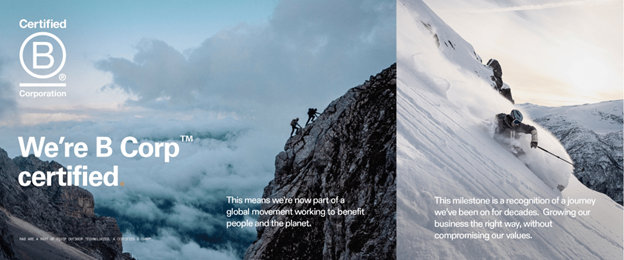
The company has always seen business objectives as complementing doing something better and good for employees, for the environment, for our stakeholders and partners. Internally we were already doing a lot, but we didn’t talk about it a lot externally and did not have external certification, something which matters to our retailers and partners and validates that we try to do our best across the whole supply chain. So it felt like a natural step. But it’s an intense process, not a gift. It requires you to be very structured in many areas. We thought we were ready, but you don’t know until you submit. It actually went through almost flawlessly, with always a bit of work to do. And it’s just the beginning, not a “see you in three years”. It has sparked a lot of good, healthy internal conversations about how we can do better. We were always driven by a purpose beyond the economics of business, so it was the cherry on the cake that unlocked a new chapter for us.
Talking with you feels like Equip is a great company to work for, how would you describe the company culture day to day?
It’s what you would expect! What I saw when I joined is still there today. We’re growing, so there are more people, but the genuine mountain people spirit hasn’t changed. It remains an integral part of our culture. The difference is that we’re becoming a global player, and to do that you need to think about people. You need to become a global employer, not just a global business.
That’s a challenge for growing companies: the culture in Germany is different from France, and regulations differ. That’s a big part of the work. What struck me when I joined, and what is still very much there, is the passion. Everybody is hands-on. When there’s an issue, everybody says, “Okay, we’re going to sort it out”, and we do. It’s a culture of problem solving, which is a nice buzzword, but here there’s real passion behind it. People want to improve, whether it’s product, brand, sales or finance. We also run internal surveys, and one of our strengths is how committed people are and how proud they are of the brand they represent. We make great products that let people enjoy the outdoors.
If you want to be global, that also needs to be reflected in the people you employ. You can see that in our board: there’s myself, Italian and living in the Netherlands, and our CMO, who is from the US. It’s also part of our wider hiring approach. The one limit is physical location. If you have an office in Munich, it can be difficult to hire someone based in Berlin. But flexible working helps. For some roles, I always say: better to hire the best candidate and find a way, even if they’re two hours from the office, than to pick someone nearby simply because you want them sitting at a desk. And it’s paying off. Some of our best hires have been like that. It’s about the people and their passion for the brand and their work.
I’m also a strong believer that you don’t need to hire only from the outdoor industry to be successful here. We can learn a lot from other businesses and industries, and everybody in the team benefits from that. It also creates a more collaborative way of working, because everybody brings a different perspective and can contribute.
“WE ARE RAB – THE MOUNTAIN PEOPLE” – video
What made you want to exhibit at ISPO, and are you happy with what you found?
We’ve always supported B2B trade shows. We’re a wholesale-led business, so the majority of our turnover comes from retailers, and it’s important to be there when the industry gathers. So we signed up. It’s been a really busy day on our stand, and looking around, it looks good; the vibe is good. The challenge for the industry is to attract more outdoor brands and audiences, so the show becomes bigger. We gave it a go. Tomorrow’s another day, and next year will be another year. But 2026 looks good!
Final one. You have an open mic to the largest audience in the sports industry in Europe. Any message you want to share?
One message: this industry has something many other industries don’t have, which is passion for what we do. Linked to what we discussed yesterday at the ISPO Leaders Summit, how do we get more people enjoying the outdoors? How do we get the younger generation out of their screens? I think we’re more powerful as an industry than we believe, but we need to be a louder voice in a digital world. We strongly believe in what the outdoors can bring everybody, starting with personal health, but not only. Someone who enjoys the outdoors is often a better person within their family and their job, even in another industry. So the message is really an open question: how do we use that power so that more people enjoy the outdoors and truly believe in its power every day?
Thank you for the focus lesson Hervé and good luck for the end of your strategic plan!